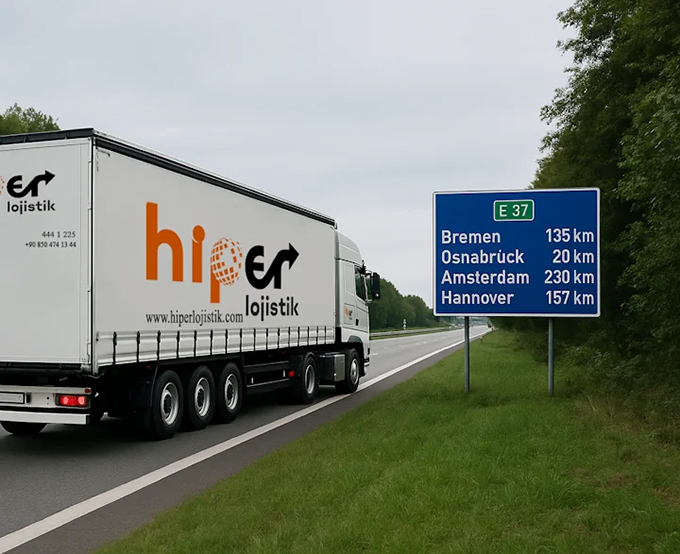
In the 21st century, logistics has evolved from a background operational function into the strategic bloodstream of global commerce. The term itself originates from the Greek word logistikos, meaning “skilled in calculating.” Yet in today’s interconnected economy, logistics transcends calculation — it has become the art and science of harmonizing resources, time, and intelligence across borders.
Defining Modern Logistics
At its essence, logistics is the systematic planning, execution, and control of material and informational flows from origin to destination. It encompasses every stage of the supply chain — from procurement and storage to transportation, distribution, and reverse logistics.
However, in the modern era, logistics goes beyond the physical movement of goods. It now integrates data intelligence, automation, sustainability, and human-centered design, shaping what experts increasingly define as the Intelligent Supply Chain.
From Transportation to Transformation
For decades, logistics was about efficiency — moving more, faster, and cheaper. Today, it has shifted toward resilience and adaptability.
Global disruptions such as pandemics, conflicts, and energy crises have underscored that logistics is not merely about transportation; it is about sustaining the continuity of societies.
Companies like Hiper Logistics Inc. Co., through advanced digital infrastructure and analytical precision, have redefined logistics as a strategic enabler of sustainable global progress. Their approach exemplifies how transportation networks evolve into ecosystems where technology, sustainability, and intelligence converge.
The Core Components of Logistics
- Transportation Management – The foundation of logistics, ensuring efficiency through route optimization, load balancing, and regulatory compliance.
- Warehousing and Inventory Control – A delicate balance between cost-efficiency and service quality. Modern warehouses operate as data-driven hubs, integrating automation, robotics, and predictive analytics.
- Information Systems – The digital nervous system of logistics. Real-time data, blockchain transparency, and AI-assisted decision-making transform logistics into a predictive science.
- Customer-Centric Service – Logistics today is an experience economy. Transparency, real-time visibility, and proactive communication define the trust between provider and client.
Artificial Intelligence and the Digital Revolution
The integration of Artificial Intelligence (AI), Machine Learning (ML), and Internet of Things (IoT) technologies has revolutionized every layer of the logistics process.
Through predictive analytics, logistics providers can now forecast demand fluctuations, anticipate disruptions, and optimize routing with remarkable precision.
Hiper Logistics Inc. Co. employs such technologies to ensure eco-efficient operations, minimizing fuel consumption, reducing carbon emissions, and aligning logistics performance with environmental responsibility.
In this sense, logistics becomes not only smarter — but ethically intelligent.
Sustainability as a Strategic Imperative
Sustainability is no longer a corporate aspiration; it is a strategic obligation.
The modern logistics landscape demands eco-conscious solutions — from fuel-efficient fleets and renewable energy usage to carbon-tracking technologies and recyclable packaging systems.
For Hiper Logistics Inc. Co., sustainability is not an afterthought but a core pillar of innovation.
By integrating green practices into every level of operation, the company reinforces the principle that economic performance and ecological balance are not opposites — they are complementary forces shaping the future of global trade.
The Human Dimension of Logistics
Despite the dominance of automation and algorithms, logistics remains a profoundly human enterprise.
Behind every delivery, there is a network of trust, precision, and accountability. Logistics connects people to possibilities — from life-saving medical supplies to the infrastructure that builds cities.
Hiper Logistics Inc. Co. believes that the true value of logistics lies in empathy-driven reliability — a commitment to ensuring that every shipment carries more than goods; it carries confidence and continuity.
Looking Ahead: The Future of Intelligent Logistics
As global industries advance toward full digital integration, logistics stands at the intersection of technology and humanity.
The future belongs to organizations capable of uniting AI innovation, environmental consciousness, and ethical responsibility under a single framework.
Hiper Logistics Inc. Co. envisions logistics not as a background function but as a dynamic force of intelligent coordination — shaping economies, protecting sustainability, and strengthening human connection.
In this vision, logistics becomes more than movement.
It becomes what it has always truly been: the intelligent rhythm of a connected world.
source (reference) link:
