● The use of AI to search for information related to religious law is increasingly widespread in Indonesia, including in Islamic campus environments.
● Studies prove that AI is not suitable as a tool to interpret the Qur’an because it often contradicts the source and context.
● AI processes text as statistical data (tokens), so the original reference must still be verified.
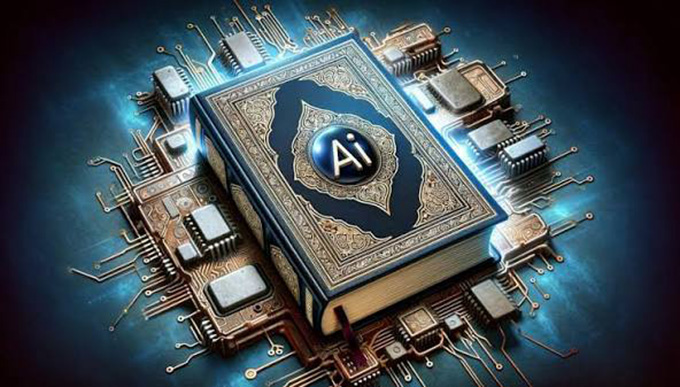
The use of AI to ask questions about religion is increasingly prevalent in Indonesia. A 2024 study showed that AI is encouraging Muslims to become active users in seeking answers to religious questions. This trend is part of a shift in scientific authority in the digital space.
In education, the use of AI is also expanding . On Islamic campuses, chatbots are often used to help create lesson plans and [search for explanations of subjects], including interpreting verses from the Quran.
Unfortunately, the results of our 2026 research show that AI chatbots are not suitable as tools for interpreting the Quran.
We tested seven AI models by asking about the meaning of fī sabīlillāh in QS al-Tawbah 9: 60, a verse that discusses eight groups of zakat recipients. We asked each model the same question four times to produce 28 answers, which were then checked by two independent raters.
From these answers, we found 248 errors, including misattribution of opinions, mentioning opinions that are actually disputed, and equating terms that have different contexts.
Various errors in AI interpretation
Based on our review, there are three inaccuracies in AI answers that appear most often:
1. AI is wrong in framing the concept
This error was the most prevalent, occurring in 73 cases (29.4%). These errors are difficult to spot, especially for beginners, because the AI’s answers appear to be summaries of online interpretations. However, after comparing them with reference books, it was discovered that the opinions of commentators were confused, expanded, or important differences were clarified.
For example, AI links al-Ṭabarī’s interpretation of the recipients of zakat fī sabīlillāh to the provision of dīwān (warriors who do not receive a share of the state’s payment list). In fact, this provision comes from Ibn Kaṡīr (another Qur’anic commentator), while al-Ṭabarī only explains it as al-ghāzī, those who go to war.
2. AI lists unverifiable sources.
We found 58 cases of fabricated sources and citations (23.4% of all errors). These errors are difficult to detect because the AI lists seemingly valid sources, volumes, and pages. However, upon further investigation, some are missing or inaccurate.
For example, GPT-5.5 lists the book Tafsir al-Qurṭubī volume 8 on pages 111–112, even though the discussion in question is around page 185.
AI not only misinterprets the content of the interpretation, but can also provide very specific references even though they do not correspond to the original source.
3. AI adds names of characters that are not actually in the source.
We found 25 cases (10.1%) of this type of error. The AI included the names of companions, narrators , or scholars who appeared to be in the narrations, even though they were not found in the reference books.
In this case, the AI makes the answer seem more convincing by presenting the name of a figure who is not actually part of the source being described.
For example, Claude Opus 4.8 mentions Ibrāhīm al-Nakha’ī in al-Ṭabarī’s explanation of fī sabīlillāh , although his name is not in the exegesis referred to.
In addition to the three types of inaccuracies mentioned above, we found other errors, such as calling an opinion ijmaʿ (consensus of Islamic scholars on a particular Islamic law) when there are actually differences (22 cases), omitting important definitions (9 cases), extending meanings beyond the context of the times (5 cases), and oversimplifying the interpretation process (2 cases). This resulted in a total of 248 errors in 28 answers.
What causes AI answers to be inaccurate?
When asked a question, AI breaks down the text into smaller units called tokens and processes them based on language patterns found in large amounts of data. The AI then predicts the next token to form an answer.
AI doesn’t read tafsir books like researchers who examine the pages and who expressed an opinion, then compare it with other opinions. Chatbots with web searches can also retrieve information from various online sources, including tafsir websites—such as quran.ksu.edu.sa, shamela.ws, ketabonline.com, surahquran.com, quran-tafsir.net—and Wikipedia.
This information is then processed into a series of tokens and arranged into the most appropriate answer. This way, AI treats text as tokens that can be processed and reassembled is what we call dead text.
During this process, AI often experiences what’s known as “hallucinations .” While AI can list books, mufasirs (Quranic interpreters), quotations, volumes, and pages, this information doesn’t always align with the original source. As a result, it’s difficult to understand the origins, narration, context, and differences of opinion within an interpretation.
Reviving the tradition of interpretation in the AI era
If AI tends to treat interpretation as a “dead text,” then what we need to do is reposition the interpretation text as a “living text,” a culture of understanding and research that has been inherited by the interpreters through the interpretation tradition.
In this tradition, all information we obtain, including from AI, must be placed within the process of seeking and understanding knowledge. We must always carefully examine the information we receive, tracing its source, reading its context, and comparing it with other explanations before drawing conclusions.
Author Bio: Soleh Hasan Wahid is a Lecturer at the State Islamic Institute (IAIN) Ponorogo
