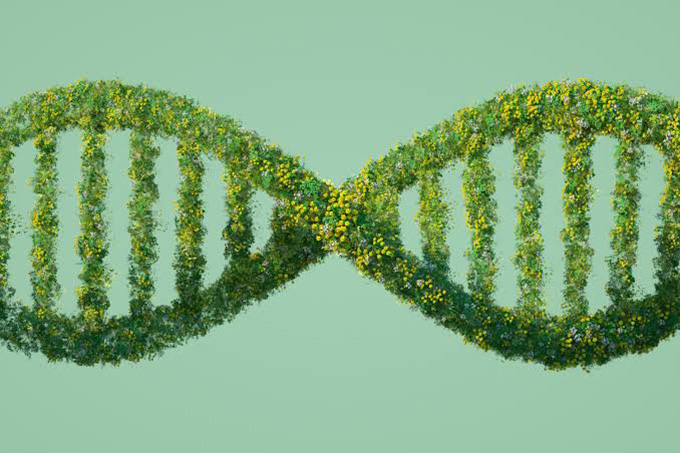
Much has been said about the sociological revolution that generative AI will bring to humanity. However, its repercussions in biology have barely been discussed, even though this reality is truly staggering. Because we’re not talking about future possibilities or what AI could do. We’re talking about what AI is doing today .
The great methodological change
Throughout the history of biology, scientists have dedicated themselves to deciphering the rules of life by observing it, formulating hypotheses about its workings, and designing reproducible experiments to verify whether our proposals would lead to brilliant discoveries or resounding failures. Thus, with immense effort in terms of time, resources, and thoughtful discussions, we have gradually unraveled the nature of this elusive thing called life and provided solutions to a wide range of problems, including those aimed at addressing the many pathologies of our imperfect bodies.
On this fascinating journey, technology has been an extraordinary ally and the best accelerator of the pace of our discoveries in recent years. But what is happening now deserves its own chapter of reflection because AI is not simply a “technical aid.” It is not a spectacular processor of millions of simultaneous data points, nor even a quantum leap in the capacity to generate knowledge. Nor are we talking about a paradigm shift, because it is not limited to a profound change in the way we understand or interpret the language of biology.
We are talking about something much more serious, for which, in my opinion, the word revolution falls ridiculously short.
What is AI doing?
Let’s start with the simplest thing in life: its biomolecules. Gradually (and with great effort), we have identified the amazing proteins that exist in nature. For some of them, once their function was established, their possible application in solving agricultural, livestock, or ecological problems was studied, and especially in trying to alleviate the effects of different human diseases.
With generative AI, the rules of the game have changed radically. Now we can do something as amazing as defining a specific biological function and, based on that definition, generating a protein de novo to perform it. It’s no longer about identifying a new protein, discovering its purpose, and then, by manipulating its concentration or location, solving a problem. Now it’s possible to say, “I have this problem, and I want to create a protein/solution that serves exactly the purpose I need.” In fact, structural proteins that don’t exist in nature are already being generated, and their functional response is being tailored to their specific formulation .
Furthermore, it is possible to produce the specific enzyme protein capable of catalyzing a particular biochemical reaction . AI can even generate several similar enzymes and select the most efficient ones.
The reality is that the type of molecule is no longer a limitation. AI can generate, indiscriminately, small peptides as well as large proteins, antibodies, RNA, fusion proteins, or new molecules with potential therapeutic applications. The massive synthesis of new molecular designs (for example, antibodies ) has been so spectacular that the problem is now shifting to the limitations of having the physical capacity to test them all experimentally.
Guiding evolution with AI
But AI is also doing something groundbreaking in this regard. So much so, that it’s already possible to “replace” biological evolution itself and do in seconds what natural selection may have taken thousands or millions of years to achieve (or hasn’t even achieved yet). For example, for viruses as striking as Ebola or SARS-CoV-2 , AI has generated mature antibodies with up to seven times greater affinity for viral antigens than natural antibodies, and up to 160 times greater affinity in the case of immature antibodies. Something similar can be done with RNA molecules, whose evolution is already being “directed” in processes as important to our health as the activation of cancerous processes.
Amazing, right? Well, let’s take it a step further. Evo 2 is an AI model trained on approximately 9 trillion base pairs of DNA from bacteria, archaea, viruses, plants, fungi, and animals (including humans), and it hasn’t been assigned any specific biological task. Well, it was able to learn biological rules directly from the DNA sequences, predict the effects of mutations, and… generate new DNA!
This is not merely an advance: it’s a monumental leap forward, moving beyond simply predicting biology to the possibility of genuine biological engineering. In other words, we’re talking about creating life.
A deep reflection is urgently needed.
Reality is pressing. With such a wide range of possibilities opening up in the world of biological research, the potential futures are as wondrous as the dizzying possibilities they generate. We have gone from observing and modifying nature to creating new molecules and circuits that evolution has never previously explored. Moreover, given the pace at which this seems to be progressing, it is quite possible that the actual design of living organisms of species that do not exist and have never existed will soon be feasible.
I believe the time has come to seriously consider that it is no longer enough to simply ask ourselves if we are capable of creating a new biology. We must carefully reach a consensus on what kind of biology we want to create, or, more importantly, whether we should actually create it at all, who should be able to do so, and what consequences we are prepared to accept. And all of this must be done free from ideological biases, political interests, economic pressures, moral reductionism, short-sightedness, or naive and childish idealism.
Ethical reflection must be very deep, very deliberate, very transdisciplinary, and extraordinarily well thought out.
We are literally risking our lives as we know them.
Author Bio: A. Victoria de Andrés Fernández is Full Professor in the Department of Animal Biology at the University of Malaga
