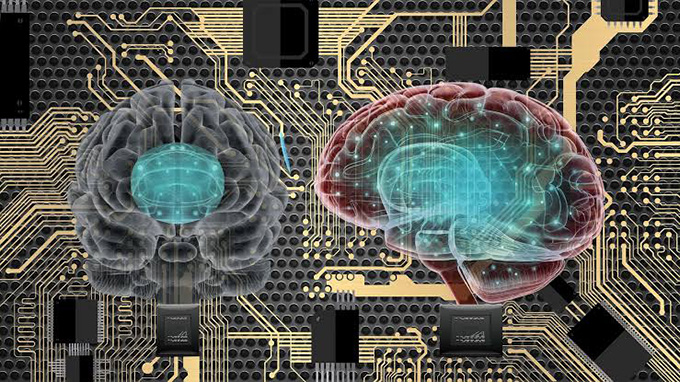
From 2025, you’ll are able to buy a computer whose strangest component isn’t a new processor, but a culture of live human neurons. The CL1 , developed by the Australian company Cortical Labs, is marketed as a biological computing system and integrates neuronal cells onto an electrode array. This allows the neurons to be stimulated and their activity recorded, while maintaining them in optimal conditions through an internal life support system.
That doesn’t mean there’s a tiny brain thinking inside the computer. There are living cells, electrodes, electronics, and software forming a single system. And CL1 isn’t the only example.
In April 2026, Princeton researchers published their design for a three-dimensional device integrating approximately 70,000 neurons with a microelectrode array . The system, which can stimulate and record the neuronal activity of its components, was able to distinguish spatial and temporal patterns after a training process. The researchers kept the cultures running for more than six months.
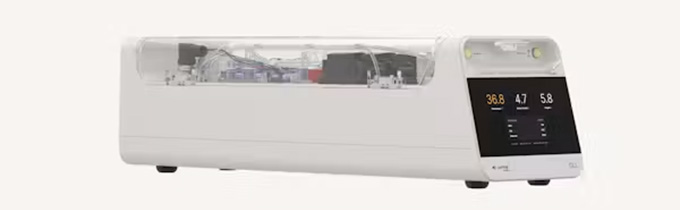
The CL1 computer, which incorporates live neurons into its electronics. Cortical Labs.
When a neuron becomes a component
A neuron can receive electrical stimuli, produce a response, and modify its connections with other neurons based on previous activity. From an engineering perspective, this allows for a relatively simple cycle: stimulate, record the response, evaluate the result, and stimulate again.
Biohybrid computing attempts to leverage the shared characteristics of cells and electronics. A study published in Nature Computational Science in 2026 places these systems within an evolutionary path that ranges from brain-inspired algorithms and artificial neural networks to neuromorphic hardware —circuits inspired by neurons—and systems that directly incorporate living neural structures.
It doesn’t mean that a neuron behaves like a transistor , nor that a neuronal culture is equivalent to a processor . It means something more interesting from an engineering perspective: biological tissue ceases to be what we measure and becomes a functional part of the device. And that forces us to rethink even how we build electronics.
Electronics that grows with the fabric
One of the classic problems of bioelectronic interfaces is quite elementary: electronics and living tissues are not made of the same material.
A conventional electrode is practically rigid. Brain tissue is soft, changes shape, and grows. Maintaining a stable interface between the two over long periods is a problem of materials, mechanics, and biology.
One particularly striking solution was published in Nature in 2025. Researchers incorporated flexible electronics during the early stages of neural tissue development. As the tissue grew and folded, the electronics grew with it, becoming three-dimensionally integrated into the resulting structure.
The conceptual change is enormous. The sensor is not implanted in the organ: the organ is allowed to grow around the sensor.
And electronics designed to disappear
There is also the opposite problem: what to do with a device once it has finished its work? The traditional engineering answer was to remove it or design it to last as long as possible. Bioabsorbable electronics introduces a third possibility: that it disappears.
These devices use materials designed to degrade within the body once their function is complete. They can measure variables such as pressure, temperature, or electrical activity for a specific period and then be reabsorbed. This would avoid the need for a second procedure to remove them .
It’s no longer about making something last – one of the traditional principles of engineering. It’s about making it last exactly as long as necessary.
When I experience it, I cease to be just the user.
The phenomenon doesn’t end with neurons either. Because electroactive microorganisms can exchange electrons with their environment, they are being investigated for the construction of biosensors , functional materials, and systems capable of responding to environmental changes. Their potential use in living building materials, capable of incorporating detection, response, or repair functions , has even been explored . Here, something much broader than a computer made of neurons begins to emerge.
For decades, bioelectronics has placed sensors on living organisms to observe them. Now, systems are beginning to emerge in which cells, microorganisms, and tissues are part of the functional architecture itself. And when the component is alive, questions arise that a traditional electronics engineer rarely had to ask.
What regulations apply to a live component?
There is no absolute regulatory vacuum. Medical devices, biomedical research, the use of human cells, and products incorporating biological components are already subject to various regulatory and ethical frameworks. The problem is that biohybrid systems are beginning to combine categories that have historically been regulated separately. Are we dealing with an electronic device, a medical device, a cell culture, a computational system, or several of these things simultaneously?
The issue becomes especially delicate when human neural tissue is involved. In 2021, the U.S. National Academies analyzed the scientific, ethical, and regulatory implications of human neural organoids, transplants, and chimeras —organisms containing cells or tissues from two or more different individuals of the same or different species. Their report proposed different levels of oversight depending on the characteristics of the experiment and the degree of ethical concern it raised.
In 2026, an international group again called in Science for global coordination to address research with human organoids and neural assemblies.
But biohybrid computing raises additional questions: What exactly does the person whose cells end up as neurons in a device consent to? How long can that tissue be maintained? What obligations arise if the living component changes with learning or over time? And what criteria should be used if these systems move from the lab to commercial products?
It’s not Black Mirror , and that’s precisely why it matters.
A culture of tens of thousands of neurons that learns to distinguish certain patterns is not equivalent to a miniature human brain, much less does it demonstrate consciousness, intention, or understanding. But perhaps that is precisely why this is a good time to discuss its limitations.
Biohybrid systems are beginning to blur the line between machine and living organism. Perhaps we shouldn’t wait until it becomes unsettling to decide what we want to do with it.
Author Bio: Paula Lamo is a Professor and Researcher at the University of Cantabria
