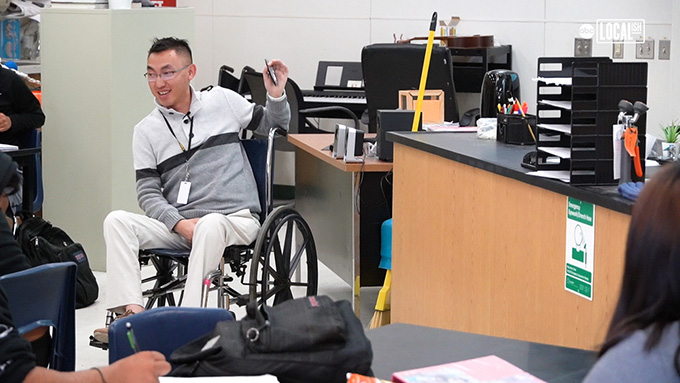
When we talk about disability in university, we usually think about student access and adaptations to classrooms and exams. But people with disabilities also complete their studies and have the right to access employment as university professors on equal terms.
Our study analyzes whether public universities comply with the legal reservation of teaching and research staff (PDI) positions and whether there are implementation failures in the reservation as a measure of equality.
What the law requires
To guarantee real and effective equality and inclusion for people with disabilities, as stipulated in the Spanish Constitution and the UN Convention on the Rights of Persons with Disabilities , a number of positions must be reserved. The Constitutional Court has upheld this measure, provided that applicants pass the selection processes. The reservation is therefore fully compatible with the principles of merit and ability.
In Spain, the percentage of public employment vacancies reserved for people with disabilities is a minimum of 7% of the total positions.
What does our study show?
To determine the degree of compliance with the quota, we requested data from all 48 Spanish public universities with permanent teaching and research positions (PDI) for the period 2016-2025. Approximately two-thirds of the universities provided it to us.
Between the years mentioned, the universities analyzed advertised 27,320 permanent teaching and research staff positions. According to the applicable percentages in each case, at least 2,255 should have been reserved for people with disabilities, but the figure only reached 244.
This demonstrates a failure in the implementation and monitoring of a public policy. Without this monitoring, the measure risks becoming nothing more than a formal declaration.
Breach of reservation
The gap is not limited to isolated cases: it is repeated year after year in most of the universities analyzed. A detailed examination of the data shows that in the period 2016-2022, no Spanish public university reached the established quota, and that in the period 2023-2025, only the universities of Barcelona, Jaén, UNED, and Zaragoza met it in at least one of those years.
The most frequent justification given by university officials for not complying with the reservation is that if the call for applications includes only one position of a certain category and specialty, then they cannot apply the 7%.
However, the Andalusian Ombudsman and the Ombudsman of Castile and León have indicated that the percentage of reserved positions must be planned on the total public employment offer, and that these offer contains dozens or hundreds of positions.
In other words, if 100 places of the same category are to be offered, even if they have different specializations, 7 must be reserved for people with disabilities.
Furthermore, the recent calls for applications for positions at the University of Barcelona and public research organizations such as the CSIC are an excellent example of how this reservation can be put into practice.
Who ensures that the law is followed?
The persistence of non-compliance raises another question: how is the reserve monitored? For a measure to be effective, its implementation must be planned, data must be available, compliance must be assessed, and deviations must be corrected. The study also revealed shortcomings in these mechanisms.
At the university administration level, we have encountered universities that simultaneously certify that they included reserved positions in their public employment offers but never actually advertised them. Others have stated that they do not have a registry of reserved positions and have therefore claimed that they cannot certify whether or not they advertised them.
While some autonomous communities denied having jurisdiction in this matter, others limited their review of university public employment offers to their economic aspects. In both situations, they are disregarding Article 65.2 of the Organic Law of the University System (LOSU), which extended to the Autonomous Communities the duty to guarantee reserved places.
The General State Administration has confirmed to us that no ministry has the authority to inquire about, inspect, or monitor the allocation of teaching and research positions for people with disabilities. This includes the Ministry of Science, Innovation and Universities and the Ministry for Digital Transformation and Public Administration.
What would have to change?
Our proposal involves strengthening the implementation and monitoring of reserved positions as an equality measure. Firstly, regarding available data, universities should automatically publish the number and characteristics of reserved positions. Furthermore, public university information systems and public employment agencies should incorporate specific indicators on disability and teaching and research staff.
Secondly, the autonomous communities should verify compliance with the quota when authorizing university programs. Universities and communities should also have monitoring mechanisms in place to detect and correct any breaches.
Finally, the Independent Authority for Equal Treatment and Non-Discrimination could examine this situation and consider opening an investigation.
In short, to achieve the goal of gender equality, we don’t need a new law: we need to commit to equality and apply existing legislation.
Inclusion at all levels
The university is understood as an open, tolerant, and egalitarian space where debate and respect prevail. These university values permeate numerous aspects, from the most general, such as the principles of merit and ability and democratic values, to more specific ones, such as equality and inclusion in matters of gender and disability.
The inclusion of people with disabilities in the university community is not limited to guaranteeing student places, campus accessibility, or accommodations during studies. It also encompasses their participation in teaching, research, and positions of academic responsibility.
The presence of people with disabilities among the teaching staff and in positions of academic responsibility provides role models for students, helps to normalize diversity, and highlights the full compatibility between disability and the development of a teaching and research career.
Author Bio: Francisco José Plaza Martín is Professor of Geometry and Topology at the University of Salamanca
