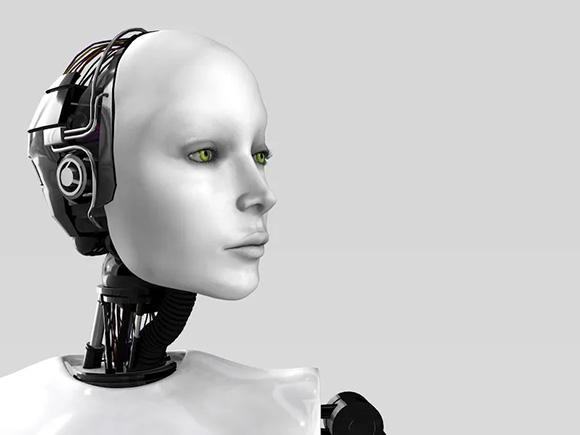
Social robots are machines with physical bodies, designed to interact and communicate with people. These bodies are genderless. Even so, the images we see in the press continue to perpetuate gender stereotypes .
In a recent study, we analyzed nearly 400 digital news articles retrieved through searches conducted in seven Latin American countries (Argentina, Brazil, Chile, Colombia, Mexico, Peru, and Venezuela) over two decades (2006–2026). We studied the images to understand what happens when we give robots a human appearance and how these images of artificial bodies shape our understanding of these technologies. Some of these images, published in news stories about robotics, innovation, and technology, even depict hypersexualized robots . Thus, we found that, even when we have the opportunity to avoid doing so, we continue to project our own inequalities onto the bodies with which we represent the future.
Ultra-realistic female features
Masculinized images of robots were far more common than feminized ones. On the other hand, robots with feminine features tended to be depicted with ultra-realistic bodies, designed to physically resemble a real person as closely as possible, mimicking characteristics such as our skin, hair, and facial and bodily features.
Thus, gender is communicated through visual codes that are very familiar to us , especially in the representations of “female” androids, which showed exaggerated body proportions: narrow waists, pronounced hips, prominent breasts and lips, long eyelashes, makeup and even accessories.
Conversely, most of the masculinized robots were depicted with a recognizable human form, but without attempting to realistically reproduce the appearance of a person. The features associated with masculinity that appeared were, in particular, robust or muscular torsos and limbs .
Stereotypical roles
The robots analyzed in our study appeared primarily as part of experiments or demonstrations, and secondarily in companionship and caregiving roles. However, those with feminine features appeared more frequently in domestic settings than those with masculine characteristics.
Beyond gender, the images presented them as symbols of innovation and progress or linked to care, assistance, and social relationships. Very few images placed them in contexts that posed risks, threats, or ethical dilemmas, or that promoted a critical approach. Furthermore, in three out of every four news stories we reviewed, the headline reinforced the meaning suggested by the image and thus guided the interpretation of the robot and the work it performed.
Between fascination and fear
Emerging technologies are often surrounded by cycles of expectation . When they appear, we tend to imagine that they will radically transform our lives, solve problems, replace jobs, or change the way we relate to each other. Alongside these promises, narratives also emerge that present them as a threat, as we have seen so often in science fiction. The media participates in this process, amplifying the promises of specific technologies, but also the risks and fears associated with them. Social robots are no exception to this tension between fascination and fear.
The question is which human characteristics we choose to reproduce when we assign a body to these technologies. Our results show that, by assigning them these humanoid forms, we can also transfer stereotypes and cultural codes present in our society. A robot’s gender is not inherent in the machine: it is constructed through decisions about its body, its face, its voice, or even its name .
The press constructs the image we have of robots
In the case of social robots, news reports can be one of the first points of contact with these machines before any real interaction, since the adoption of new technologies progresses unevenly . Therefore, journalistic images help us imagine what they look like , what they are used for, and what role they might play in our daily lives.
But this is only part of the story. Before reaching the news, these technological bodies were designed by people who made decisions about their appearance, their silhouette, their face, or specific gender-related features, which also involves incorporating social models into the design. Our study doesn’t reveal who made those decisions or why, but it does show how these bodies end up being represented and circulated by the press.
The paradox is that we are imagining and designing the technologies of the present and the future with gender stereotypes that we have been trying to leave behind for decades.
Author Bio: Iliana Ferrer is a Lecturer at the Autonomous University of Barcelona
