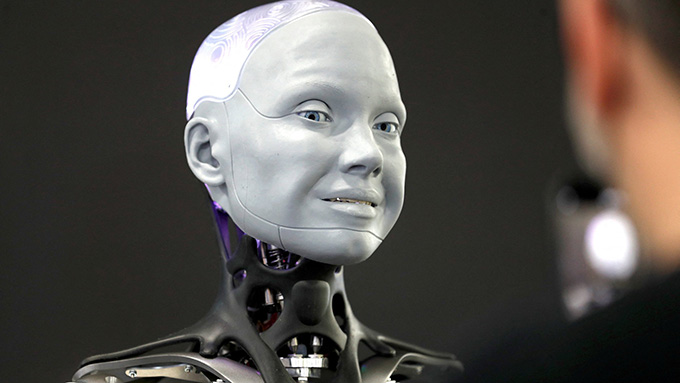
Transhumanism is a philosophical and cultural movement that argues that technology should allow us to overcome the biological limitations of human beings. Its proponents propose using advances in artificial intelligence, biotechnology, genetic engineering, neurotechnology, and other technologies to radically expand our physical and cognitive capabilities. They also envision delaying or eliminating aging and profoundly transforming human nature.
In its most extreme versions, transhumanism even contemplates the possibility of progressively replacing biological human beings with posthuman forms of existence, including eventual artificial superintelligences .
The pitfalls of ‘long-termism’
Effective altruism, on the other hand, is a philosophical approach that proposes using evidence, reasoning, and cost-benefit analysis to determine which actions can generate the greatest value. One of its offshoots is “long-termism,” which takes the perspective of effective altruism far beyond the present and places extraordinary importance on the well-being of future posthuman generations—both biological and digital —and the amount of “value” they could contribute in the distant future.
Taken to extremes, this way of thinking can lead to accepting significant costs and risks in the present , if it is believed that doing so significantly increases the value of what is to come. And here a fundamental question arises: to what extent is it legitimate to accept real harm today in the name of a hypothetical future to which incalculable value is attributed ?
From this perspective, avoiding any impediment to potential posthuman beings developing their full potential can become one of the highest moral priorities.
What do we understand by humanity?
“Humanity must be preserved,” argue the long-termists. But the question that is rarely posed clearly enough is: what exactly do they mean by this?
For the vast majority of us, it means preventing Homo sapiens from disappearing as a species. However, when certain techno-authoritarian leaders like Sam Altman , Dario Amodei —who shook public opinion with a recent statement on AI development — Nick Bostrom , Ben Goertzel , Ray Kurzweil , Elon Musk , Larry Page , Peter Thiel , or Eliezer Yudkowsky , linked to transhumanism and long-termism, talk about preserving humanity, they are not necessarily talking about preserving the human species.
Two forms of extinction
In certain debates about existential risk, a distinction has been drawn between two forms of disappearing from the map: “ terminal extinction ” and “final extinction.” According to the philosopher Émile P. Torres , the former is the definitive disappearance of Homo sapiens and any possibility of our species being replaced by a posthuman form of existence.
The “final extinction”, on the other hand, would occur when human beings are replaced by some form of posthuman existence considered valuable enough to represent a continuity of humanity.
The distinction is not a mere play on words: it has enormous philosophical and political consequences. It implies that, for certain transhumanist perspectives and some sectors of effective altruism, the disappearance of the human species as we know it would not necessarily be the worst possible future. The worst scenario would be for our species to disappear without leaving any posthuman successor capable of developing that future. Thus, the progressive replacement of human beings by a new form of existence considered superior could be interpreted as a continuation—and even a culmination—of humanity.
The role of artificial superintelligence
To achieve this transhumanist future, many of its proponents, especially in Silicon Valley, believe that the gradual replacement of human beings necessarily involves the development of artificial superintelligence . And here a particularly disturbing consequence emerges. If this artificial superintelligence is conceived as the necessary instrument to achieve a future that is, in theory, immensely more valuable, then the risks associated with its development , however great they may be, can be considered an acceptable price to pay.
From this perspective, regulating, slowing down, or halting the development of a hypothetical artificial superintelligence could be interpreted not as a prudent measure, but as a renunciation of the future. The possibility of a present catastrophe is thus subordinated to the promise of a hypothetical future.
Who makes the decisions
In this context, the question is no longer simply how we can avoid the risks of AI, but rather what future we consider desirable and what risks we are willing to take to achieve it. And that decision cannot be left to a small group of businesspeople , investors, and technologists convinced that their particular vision of the future should become the destiny of all humanity.
The problem becomes even more serious when the same companies that develop these technologies present themselves as the only ones capable of managing their risks.
If they manage to convince society – and, above all, political leaders – that only they possess the knowledge necessary to prevent a catastrophe, they grant themselves a supposed ability to determine what risks we must accept, what developments are legitimate, and what future we should pursue.
This concentration of power is incompatible with a democratic society. Those who have invested billions of dollars in the development of artificial intelligence cannot simultaneously be the arbiters of the risks that this technology generates. And they certainly cannot decide for society as a whole what “progress” means or what future is worth building.
That is why the recent statements by Donald Trump , supported by the top executives of major technology companies, are especially worrying, arguing that superintelligence is the horizon we must reach and that its risks must be managed through self-regulation by the very companies that compete to develop it.
For effective democratic control
The contradiction is clear: self-regulation cannot become a way to privatize a decision that affects all of society. We cannot tolerate that the companies competing to be the first to achieve a hypothetical artificial superintelligence are also the ones who determine when risks are acceptable, what safeguards are sufficient, and how far the race should go.
We need public institutions capable of exercising effective democratic control over these technologies, establishing which developments require limits and which technological objectives we want to promote. And we need to do this before fundamental decisions are irreversibly conditioned by those who control technology, capital, and infrastructure.
Author Bio: Ramón López de Mántaras is a Research Professor at the CSIC at the Institute for Research in Artificial Intelligence (IIIA – CSIC)
