● The presence of ‘AI influencers’ benefits marketing, but triggers copyright infringement.
● Deepfake and voice cloning technologies have the potential to violate personal data protection laws.
● AI-based virtual characters are at risk of spreading disinformation, and legal liability rules are needed for their developers.
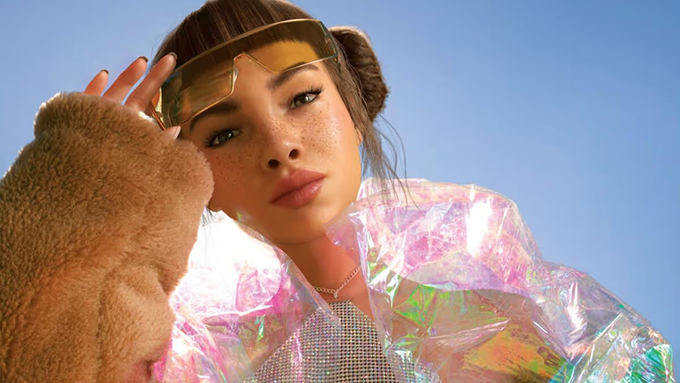
The emergence of artificial intelligence (AI) influencers demonstrates that AI development has entered a more complex phase than chatbots or digital image generators . AI can now create lifelike virtual figures: with faces, voices, speaking styles, and even personalities that can interact with the public like real people .
These artificial intelligence-based digital figures are generally designed to create virtual personas with identities, characters, and social media presence. Among brand owners, digital marketing agencies, and advertising professionals, AI influencers are seen as an efficient alternative for digital marketing campaigns.
AI influencers are used to market products, build brand image, influence public opinion, and shape consumer behavior.
Various studies show that virtual influencers offer a higher level of control over brand messaging, content consistency, and reduced reputational risk.
Unlike human influencers who have personal lives, political views, and the risk of controversy, AI influencers can be tuned to always align with a company’s communication strategy.
However, generative AI technology is now capable of replicating a person’s face, voice, expressions, and even creative character with a level of similarity that is difficult to distinguish from reality.
As a result, the issues that arise are no longer just technological innovation, but also the exploitation of human identity in the digital space.
When AI “eats” human work
Most generative AI systems work by studying millions of data sets from the internet , ranging from photos, music, videos, illustrations, to writing.
This data is used to train AI to generate new, natural-looking content. The problem is, many of the works used in the AI training process are copyrighted and taken without the consent of their creators.
Under Law Number 28 of 2014 concerning Copyright , creators have the exclusive right to reproduce, adapt, distribute, and publish their creations. When a work is used to train an AI model without permission, the question arises whether this process can be considered a form of copyright infringement.
The problem becomes more complicated when AI begins to mimic the distinctive style of a particular creator. For example, various generative AI models are capable of producing images that resemble the style of famous painters like Vincent van Gogh or the work of the animation studio Studio Ghibli .
In the music industry in 2023, the AI song “Heart on My Sleeve” made global headlines for imitating the voices and vocal characteristics of Drake and The Weeknd without the involvement of the two musicians.
This style mimicry phenomenon raises new concerns: AI is not only using human work but also replicating the creative identity of its creator. Copyright law protects not only the economic value of a work but also the moral rights of the creator, including their creative integrity and reputation.
Human faces and voices can now be faked
The issue of AI influencers becomes more serious when deepfake and voice cloning technologies allow AI to imitate a person’s face and voice simply from pieces of digital data available on the internet.
In some cases, this technology has been used to create fake videos of public officials, synthetic pornographic content, and even advertisements using people’s faces without their consent.
In Indonesia, this issue is directly related to Law Number 27 of 2022 concerning Personal Data Protection (PDP Law) . A person’s face and voice can be categorized as biometric data that receive special legal protection.
This means that using someone’s identity to build an AI avatar without permission is no longer just a digital ethics issue, but has the potential to be a legal violation.
Worse still, digital identity exploitation now targets more than just public figures. Anyone can become a victim. At this point, the line between reality and digital manipulation is becoming increasingly blurred.
New threats to digital democracy
AI technology allows someone to create fake videos that appear authentic. For example, a deepfake video of a public official making a specific statement. AI can also be used to create political propaganda, digital insults, and disinformation that is difficult for the public to verify.
In the Indonesian context, this condition is related to Law Number 1 of 2024, the Second Amendment to Law Number 11 of 2008 concerning Electronic Information and Transactions (ITE Law) , particularly regarding the manipulation of electronic information, the spread of fake news, and defamation.
The problem is, AI development is progressing much faster than the law’s ability to anticipate its impact.
AI cannot be held liable because it is not a legal entity. AI has neither consciousness nor free will. So, when AI is used to create deepfakes , forge identities, or exploit the work of others, who is responsible?
The current global debate is starting to move towards the concept of shared liability , namely shared responsibility between AI development companies, digital platforms, and end users .
AI companies can be held liable if they use illegal data or fail to establish safeguards against misuse of the technology. Digital platforms also bear responsibility if they allow the distribution of infringing content without adequate oversight.
While AI users can still be considered the most responsible parties when intentionally using AI to defame, create synthetic pornography, or exploit the identities of others for economic gain.
AI must remain subservient to humans
In the latest discussions of the World Intellectual Property Organization (WIPO)—the international organization that develops global intellectual property rights norms and policies—the issue of AI and synthetic media was one of the main agenda items.
WIPO highlights the need for a balance between technological innovation and the protection of creators’ rights, the right to identity, and the public interest in the era of artificial intelligence. One principle being emphasized is that AI must remain a tool that serves humans, not replace or exploit them.
Therefore, the biggest challenge in AI development is how to maintain human values amidst increasingly limitless technological capabilities.
Today, AI can create virtual humans. Tomorrow, AI may influence how humans perceive reality itself.
If the law fails to establish clear boundaries, then the future of AI will no longer be simply about technology, but about how humans maintain control over their identity, creativity, and dignity in the digital age. is
Author Bio: Rianda Dirkareshza is Coordinator of the Business Law Study Program, Undergraduate Program, Faculty of Law at the National Development University Veteran Jakarta
