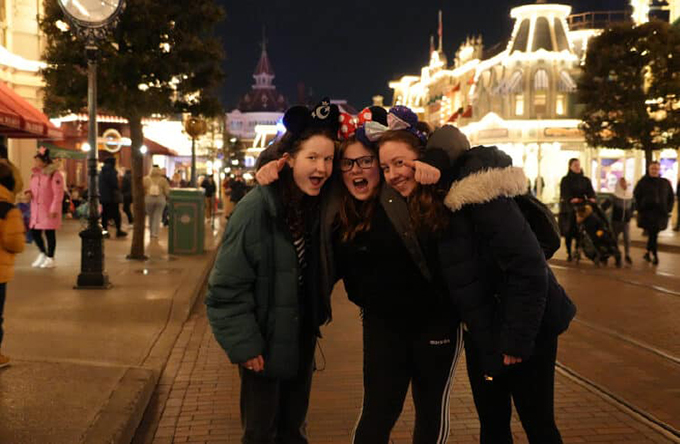
Few events generate as much excitement during adolescence as end-of-year trips. Being away from home, spending time with friends, and enjoying a newfound sense of freedom make these trips particularly intense experiences. For many young people, they represent one of their first opportunities to develop greater autonomy, make their own decisions, and interact with their peers outside of the usual supervised environments.
For this very reason, end-of-year trips provide an ideal setting for developing identity, autonomy, and responsibility. However, not all trips offer the same opportunities or produce the same results. The key lies not only in the act of traveling itself, but also in how time is managed during those trips.
Free time, with and without structure
Leisure time plays a crucial role in the psychosocial development of adolescents. Leisure activities can be classified as structured or unstructured .
The first group includes team sports or individual sports, volunteering, participation in youth groups of music, theater or other cultural and religious activities, which are characterized by being organized, supervised and goal-oriented.
In contrast, unstructured activities include unsupervised time and less organized activities, such as hanging out with friends or spending long hours on activities without a specific purpose.
Structure is not a lack of freedom
The difference between these two types of leisure lies not in the amount of freedom they offer, but in the context in which adolescents exercise that freedom. The structure does not involve controlling every move, but rather providing opportunities to progressively develop autonomy and assume responsibilities in a safe environment.
In this context, end-of-year trips involve long periods of free time shared among peers, often with less supervision and less structure than in other everyday settings. These characteristics make them an interesting scenario for analyzing how the organization of free time can influence adolescent behavior.
Risk factors and decision making
When free time lacks structure, certain risk factors increase . Being away from home reduces perceived norms: things that teenagers wouldn’t do in their usual environment may be perceived as more acceptable while traveling. Furthermore, the increased time spent with peers intensifies the influence of the group, which becomes a constant reference point for decision-making.
The trip creates a psychological context where certain behaviors may be more accepted and expected. Although not all adolescents participate in these activities, both the likelihood and intensity of certain risky behaviors increase .
Living with peers and with social networks
This group dynamic is further complicated by the role of social media. During trips, teenagers often share images, videos, and experiences, which can increase social pressure, the need for approval, and phenomena such as fear of missing out (FOMO).
The search for social validation, coupled with constant exposure to peer-shared content, can encourage impulsive or riskier behaviors. Furthermore, increased screen time during these periods has been associated with substance use, risky sexual behavior, and problematic online behaviors such as sexting and cyberbullying .
The evidence also shows that these behaviors rarely occur in isolation. Alcohol and drug use, risky sexual behaviors, and problematic activities in digital environments tend to cluster together and form part of a single pattern fostered by disinhibition, peer influence, and a reduced perception of danger.
An opportunity to grow
However, concluding that travel is negative would be a mistake. In fact, it can be an extraordinary educational opportunity. It allows interaction with new environments, fosters openness to diversity, promotes intercultural attitudes, and contributes to the personal development of adolescents.
Some models, such as educational tourism , often combine engaging experiences for young people with structured activities and learning objectives. This type of program is associated with opportunities to develop autonomy, strengthen identity and well-being, and acquire personal and social skills. However, this approach is not common in many teenage trips.
How to balance fun and learning
It is therefore possible to organize the experience of an end-of-year trip in such a way that, in addition to having a good time, young people mature and learn , by incorporating structured activities, spaces for participation and responsibilities adapted to their age, and avoiding excessively unstructured leisure periods , since these increase the likelihood of impulsive behaviors and negative group dynamics.
Educational centers should plan meaningful activities , reduce critical idle time, and establish clear rules; it is also important that those interested participate in the design of the activities, so that they respond to their interests and needs: hiking, camping, guided debates to reflect on the experiences, in addition to the aforementioned sports and team games, volunteering, or cultural activities.
From the family, it is essential to educate in decision-making, foster personal strengths and prepare teenagers to manage peer pressure and the risks associated with the digital environment.
Enhancers of the good
End-of-year trips are contexts where many of the dynamics typical of adolescence intensify: the search for independence, identity formation, peer influence, and decision-making. Understanding how these environments function is not intended to cause alarm, but rather to guide and improve their design.
Because teenagers don’t need less autonomy; they need better-designed environments in which to learn how to exercise it. And when freedom is accompanied by structure, travel can become a genuine educational opportunity.
Author Bios: Paola Alexandria Pinto de Magalhães is a Researcher – Faculty of Nursing – Positive Development of Children and Adolescents, Maider Belintxon Martín is a Professor at the Faculty of Nursing. Director of the Department of Community and Maternal-Child Nursing. Area of expertise: maternal-child health and Pablo Tabuenca Agramonte is a doctoral candidate. Nursing care in childhood and adolescence all at the University of Navarra
