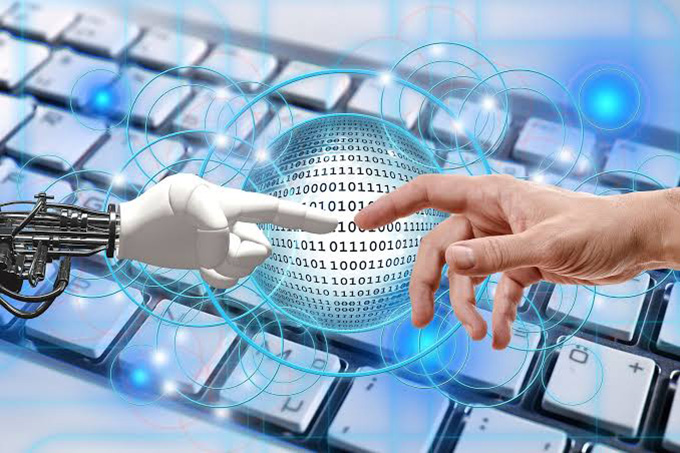
- A study highlights that discriminated-against consumers are more inclined to turn to AI-based recommendations rather than human advice.
- The fear of being judged or experiencing a feeling of embarrassment can lead to the use of AI.
- If AI systems are themselves biased, they risk amplifying the discrimination that consumers were trying to escape.
What should you prepare for dinner with a budget of 20 euros and a guest who is gluten intolerant? A consumer can ask a store employee for advice or consult, for example, Hopla, the AI-powered shopping assistant launched by Carrefour. Behind this very everyday choice lies a broader question: when faced with a recommendation, do we trust a human being or an AI more?
Recent work—on decision-making processes , the impact of errors , and so on—has highlighted a clear and well-established trend: individuals tend to prefer human beings. This phenomenon, known as “algorithm aversion,” has been widely documented, even when algorithms objectively demonstrate better performance .
However, this preference is not universal. Our research highlights that it can be reversed in a widespread context: discrimination on platforms and marketplaces, that is, during the act of consuming a product or service. More specifically, consumers who experience discrimination—particularly in public spaces—are significantly more likely to turn to AI-based recommendations rather than human advice.
The emotional mechanism behind this change? Embarrassment. When people feel socially judged or treated unfairly because of an irrelevant personal attribute, they seek refuge in systems perceived as neutral and free from prejudice.
How does this mechanism work? What does it mean for the organizations involved? And what does it reveal about the hidden drivers of AI adoption?
Implicit discrimination
Discrimination in consumer contexts is far from rare. Studies show that some groups benefit from less favorable conditions than others for similar services, for example, in terms of access to credit or insurance . Beyond their economic consequences, these experiences have significant psychological repercussions. They increase stress , undermine the sense of fairness , and influence future behavior.
It is important to clarify what discrimination means in a market context. A market, broadly defined, refers to any space where consumers interact with service providers, whether it be a car dealership, a restaurant, a bank, or a healthcare platform. Within these spaces, differentiated treatment is not inherently discriminatory. For example, a VIP customer receiving premium service is treated differently based on a relevant commercial criterion.
Discrimination occurs when the differentiating factor is irrelevant and illegitimate, such as skin color, ethnic origin, or gender. What makes it particularly insidious is that it can be hidden, implicit, or even unintentional, while still causing real psychological harm to its victims.
An AI system devoid of emotions
In a field study we conducted in real-world conditions, “agents” – actually people involved in the research setup – assessed loan applications on a university campus using almost identical questionnaires, one of which included an additional question about self-assessment of skin color.
All candidates were subsequently rejected; those who had been asked about skin color reported feeling discriminated against (phase 1). During the follow-up data collection, conducted later, all participants were offered a choice between a human evaluator and an AI evaluator (phase 2).
A significantly higher proportion of those who felt they had been discriminated against in the first phase (compared to those who did not feel they had been discriminated against in the same phase) chose, in the second phase, to be assessed by the AI system described as “devoid of emotions”.
Feeling of embarrassment
Consumers who experience discrimination appear significantly more likely to trust AI-based recommendations rather than human advice. In other words, aversion to algorithms can transform into a preference for algorithms, also known as “algorithmic appreciation . “
This shift can be explained by a specific psychological mechanism: embarrassment. This social emotion arises when individuals feel negatively judged by others. In our experiments, participants exposed to discriminatory situations reported higher levels of embarrassment, and this emotion directly influenced their subsequent choices. The more embarrassed they felt, the more they sought to limit human interaction.
In this context, AI appears as a safer alternative.
AI perceived as more neutral
Compared to human beings, algorithmic systems are perceived as more neutral, more objective, and less prone to bias or prejudice .
The reality is more complex. Algorithms can be biased, depending on the data and training they receive. Yet, many people continue to consider them neutral and objective. In this context, these perceptions are what matter most. Opting for AI allows consumers to reduce the risk of feeling judged or treated unfairly again.
This effect depends on the context in which decisions are made. We observe that it is particularly pronounced in public situations, when choices are visible to others. Conversely, when decisions are private, this effect weakens considerably.
Previous social experiences
These results shed new light on the adoption of AI. They suggest that the use of automated systems is not solely motivated by considerations of efficiency or performance, but also by psychological needs shaped by prior social experiences.
For businesses, the implications are significant. In sectors where interactions can be perceived as sensitive, such as banking , healthcare, or customer service in general, offering AI-powered alternatives can help some consumers feel more comfortable. For these individuals, AI is not just a technological tool; it becomes a way to escape social judgment and regain control after negative experiences.
At the same time, these findings come with an important caveat: if AI systems are themselves biased —trained on biased data or designed without regard for fairness—they risk reproducing, or even amplifying, the very discrimination consumers were trying to escape. Even more concerning, this type of discrimination often goes unnoticed because it is hidden and difficult to detect. Deploying AI as a “safe” alternative only makes sense if that safety is real, not just perceived.
As AI becomes increasingly integrated into everyday life, understanding these mechanisms will be essential for designing more inclusive and adaptive customer experiences.
Author Bios: Arash Talebi is Assistant Professor at EDHEC Business School and Sylvain Riffe-Stern
