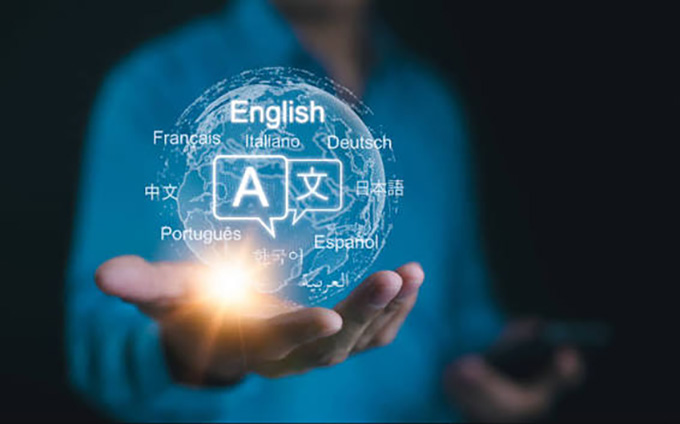
People’s interaction with generative artificial intelligence platforms, and specifically with large language models (LLMs ) , occurs, as is well known, through natural language, that is, using our language.
On the human side, prompts are given , which include questions and commands to be executed. For example, data can be requested on a topic, or a specific computer program can be generated. Inquiries about personal situations of any kind can also be made.
AI platforms provide verbal responses with reasoning. With such a tool, one can easily enter into a plausible conversational dynamic.
Language learning
From this point forward, the capabilities of artificial intelligence offer many possibilities for language learning. Through LLMs, for example, one can:
- Interact with the platform in a foreign language, both orally and in writing.
- Establish personalized training sequences and teaching units, based on the level, learning objectives, student preferences and verified progress.
- Develop tasks of oral and written comprehension and expression, or grammatical practice tasks, linked to the proposed training itinerary, with the corresponding feedback.
- Request the machine to provide commented corrections of errors in performed activities, whether or not they were prepared by AI.
- Request level or assessment tests and corrections after completion.
- Generate a linguistic pair of “human” expression with which to converse.
- Simulating common communicative situations, such as asking for or giving directions to a place, taking public transportation, or going shopping, among many others. The learner can choose their role for these imagined contexts.
In short, the variety of interactions with a generative AI chatbot is similar to interacting with a human interlocutor.
Free or paid?
In addition to using a general model, such as Chat GPT or Claude, we can turn to specialized language learning platforms, which are usually paid services. These offer structured learning units, tailored grammar and vocabulary practice activities, role-playing games , interactive simulations , and avatar creation, among other features. Mobile apps are particularly appealing because the device, by its very nature, is audio-oriented.
All of this is available any day, any time, without fear of negative judgment from anyone. And for a price that, initially, doesn’t seem expensive or is seemingly free (remember that we always “pay” with our data collected by the apps).
The unintended effects of artificial intelligence
This is the panorama that unfolds before our eyes. But the perspective is not complete. Research in recent years indicates that if complex cognitive processes, including those related to language, are systematically supported by artificial intelligence, deep learning , with regard to, for example, reading and writing practice, becomes limited. At the same time, a process of ongoing cognitive dependence develops .
To put it another way, and this has become obvious: if we use artificial intelligence to read and write for us, we become lazier and learn less. This is especially true when it comes to learning to solve complex problems. We can include language learning here if we avoid classroom assignments such as writing texts (generating them with AI) or reading books (using AI to get the answers to a reading comprehension activity).
The human factor
We must also consider the role of people. Regarding the use of AI in education, it is common to hear that teachers are necessary, for example, to structure courses or to support student learning, because machines require human supervision for optimal performance.
This was the case until recently. The latest artificial intelligence models, and specifically ChatGPT-6 Astra, are approaching the concept of artificial general intelligence , which surpasses human intelligence in all kinds of tasks. We are entering a new paradigm in which, apparently, people will no longer be needed to organize, direct, and supervise processes, including language learning.
So, can we say that human guidance is no longer necessary for learning a language? We believe the answer is yes. Machines, from an instrumental point of view, can do it very well. However, from a communicative and social perspective, interaction with real people is something else entirely.
Talking to a machine
From here, we enter more speculative territory, but one that deserves exploration. The French writer and philosopher Éric Sadin warns us about the implications of shifting from person-to-person communication to person-to-AI communication.
AI productions are deliberately “humanized” and serve as models of expression and thought for the receiving public. However, they are the product of processes distinct from those of the human mind. The linguistic strings produced by artificial intelligence come from gigantic databases that have appropriated countless language samples. Algorithms are applied to this data, predictively generating word combinations in response to human utterances.
Human language doesn’t work the same way. Everyday language use involves all kinds of communicative experiences, with information that may be contradictory or biased, but which stems from the multiple voices involved. Artificial intelligence, on the other hand, offers monotonous dialogues (in the sense that they depend on the instructions we’ve given the machine), with biases built into manipulable systems.
Limiting our language
Artificial intelligence should not be the only means of learning a language. Its indiscriminate use can limit our learning. It will also accustom us to interacting with a machine that simulates humanity, with the linguistic, cognitive, and social implications that this may entail.
A highly responsible course design, a solid understanding of how to use the tools, and an ethical framework that includes both students and faculty are essential . Artificial intelligence is like the Pied Piper’s music: it presents the challenging task of enjoying it without letting it lead us astray.
Author Bio: Marcos Cánovas is Full Professor. Department of Translation, Interpreting and Applied Languages at University of Vic – Central University of Catalonia
