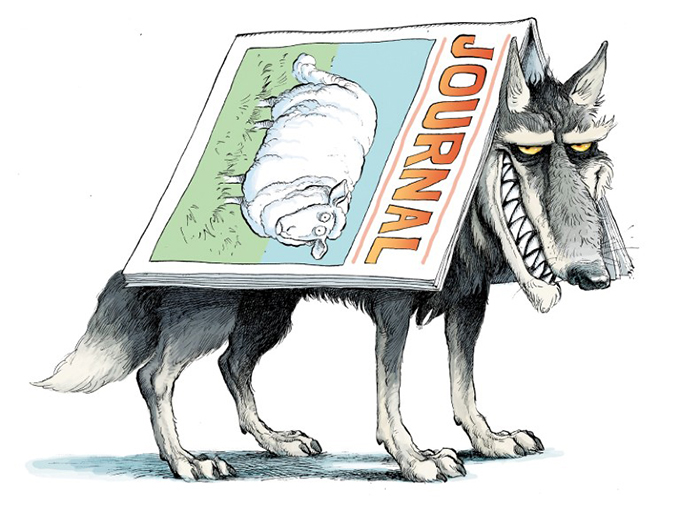
I’m often asked about predatory journals. So I recently went on a hunt for something other than lists and found a 2022 report on predatory journals and conferences from the InterAcademy Partnership. OK it’s not 2025, but it’s still well worth looking at. The IAP is a global network of over 140 science, engineering, and medical academies that work together to address the world’s most challenging problems using the best available scientific evidence. Think of it as an umbrella organisation that brings together prestigious national academies from around the world. I read their report so you don’t have to – although I do suggest you do.
The IAP report suggests that predatory publishing has evolved from a marginal problem into a global crisis threatening the integrity of academic research. Rather than simple scams targeting naive researchers, researchers face a complex spectrum of behaviours ranging from outright fraud to questionable practices even by established publishers. These behaviours include pay-to-publish/present models without peer review, fake editorial boards listing respected academics, fraudulent impact factors, journal and conference names deceptively similar to those of legitimate ones, and spam invitations to sham conferences with high registration fees.
The scale of the problem is staggering. The report suggests that over 15,500 predatory journals exist worldwide, with some evidence suggesting that predatory conferences may outnumber legitimate ones. IAP’s global survey of over 1,800 researchers revealed that nearly a quarter had either published in predatory outlets or weren’t sure if they had. If the percentages hold when scaled up, this translates to over 1.2 million researchers worldwide!
The report offers a “spectrum approach” to replace a simplistic “good” versus “bad” judgement . At one end are fraudulent journals that steal identities and commit outright deception. The middle ground includes low-quality outlets with inadequate peer review, while the other end encompasses established journals adopting questionable practices like rapid publication promises or pay-to-publish models that prioritise profit over scholarship.
The IAP survey revealed devastating personal impacts on researchers who discovered they’d been scammed. The report contains stories of careers derailed, reputations damaged, and years of work lost. Some researchers described feeling shame and professional isolation after unknowingly publishing in predatory venues.
The problem is of course not evenly distributed. The survey found that researchers in South Asia, Latin America, the Caribbean, and Sub-Saharan Africa expressed significantly more concern about predatory practices than their counterparts in the EU and North America.
The report identifies three systemic drivers fuelling the growth of predatory practices:
- the commercialisation of academic publishing which has created perverse incentives where profit often trumps scholarly integrity. The “author-pays” model of open access, while well-intentioned, has become particularly vulnerable to exploitation by predatory actors who promise rapid publication for lower fees.
- contemporary research evaluation systems that emphasise quantity over quality create enormous pressure on researchers to publish frequently. A “publish or perish” culture, combined with metrics-based assessment systems, essentially feeds the predatory publishing machine. When career advancement depends on publication counts rather than research quality, researchers become vulnerable to outlets promising easy acceptance.
- weaknesses in the peer review system that enable predatory practices to flourish. The IAP report argues that the traditional closed peer review process, designed to minimise bias, ironically provides cover for fraudulent journals to claim rigorous review while conducting little or none. Meanwhile, legitimate peer reviewers are overworked and increasingly reluctant to serve, creating capacity shortages that make corner-cutting attractive.
The IAP also found evidence that predatory practices are becoming institutionalised. Some researchers knowingly use these outlets to meet publication requirements, while institutions sometimes turn a blind eye or even profit by hosting predatory conferences. This practice threatens to fundamentally corrupt academic ethics.
According to the report current interventions such as blacklists, checklists, and institutional policies are helpful but remain insufficient. These strategies struggle to keep pace with increasingly sophisticated predatory operations and fail to address underlying systemic problems. The report argues for more fundamental reforms, including transparent peer review, responsible research assessment, and alternative economic models for scholarly publishing.
The IAP recommendations include better training for researchers and institutional support. IAP say that: universities must reform evaluation criteria to emphasize quality over quantity; funders should support alternative publishing models and penalise predatory practices; and international organizations should coordinate global responses, potentially including UNESCO-led initiatives to establish minimum publishing standards. The report also proposes that publishers need to explore less profit-driven approaches- as if!
Implications for Doctoral and Early Career Researchers
If you’re beginning your academic career, this report shows you’re particularly vulnerable to predatory practices, not because you’re naive, but because the system creates unique pressures during your formative professional years. The pressure to build your publication record for job applications, thesis requirements, or career advancement can make predatory outlets seem attractive. When you’re facing rejection from established journals, a predatory venue promising rapid acceptance might feel possible. However, the report makes clear that falling prey to these practices can have devastating long-term consequences for your career.
The good news is that awareness is your primary defence. Unlike earlier generations of academics who had to learn about predatory practices through painful experience, you have some tools and knowledge to protect yourself. Think Check Submit is a helpful tool. Check it out if you don’t know it. The IAP report’s spectrum criteria gives you a more sophisticated framework for evaluating publishing opportunities than simple blacklists. The Rising Scholars website also has relevant resources.
And you should expect your institution to provide proper training on scholarly publishing ethics and predatory practices. If such training doesn’t exist, ask for it. The report also stresses that supervisors and mentors should guide you through these challenges, but they may of course lack adequate knowledge themselves. So don’t hesitate to seek multiple opinions when evaluating publishing opportunities.
If your PhD programme requires publications and/or you’re in a job market that over-emphasises publication count, you can’t single-handedly reform these systems. But you can make choices that position you for longer-term success rather than short-term gains. Building a smaller portfolio of quality publications will ultimately serve you better than padding your CV with questionable outlets. Selection and promotion panels are likely to recognise dodgy outlets.
The momentum for responsible research assessment may mean that the evaluation criteria you’ll face throughout your career increasingly values quality, impact, and diverse forms of scholarly contribution rather than simple publication counts. This kind of shift would reduce the incentives that drive researchers toward predatory practices.
New models of open science, alternative peer review systems, and innovative publishing platforms may offer you pathways that align better with your values and career goals than traditional approaches. And you can contribute to ethical peer review, support initiatives for transparent evaluation processes, and help build the academic culture you want to be part of. As well, why not consider becoming an advocate for change within your field? As an early career researcher you often have fresh perspectives on systemic problems as well as fewer entrenched interests.
Finally, it’s important to remember that falling victim to predatory practices reflects systemic failures, not any personal shortcomings. The researchers sharing their painful experiences in the IAP report weren’t careless or incompetent. Like all of us, they were navigating a complex system designed to exploit the very dedication and ambition that brought them to academia.
Your awareness of these challenges, combined with the kind of institutional reforms the report advocates, point to a more secure and ethical foundation for your scholarly career.
