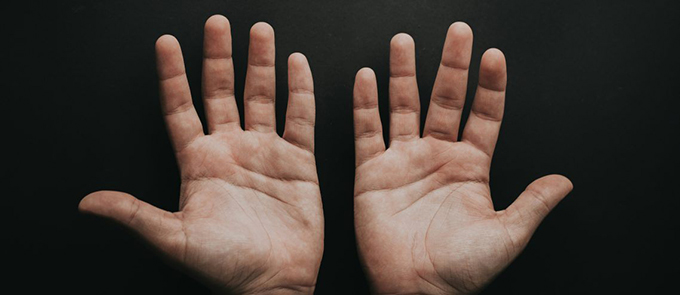
You’ve probably noticed that when you’re writing, playing soccer, or brushing your teeth, you always use one hand more dexterously than the other. This isn’t a coincidence: it’s a characteristic called handedness, which means our brain prefers to use a specific hand for precision tasks. But why does this happen?
A question of energy saving
About 90% of people are right-handed, about 10% are left-handed, and very few, less than 1%, are ambidextrous (they can use both hands with equal skill). This characteristic has a lot to do with how our brains are organized.
The human brain is divided into two parts, or hemispheres , that are responsible for controlling different movements. While the left hemisphere primarily controls the right side of the body, the right hemisphere controls the left side. This cross-organization explains why, if someone suffers an injury to the left side of the brain, their right hand may lose mobility or precision.
Lateralization is a wonderful energy-saving strategy. If both hands performed everything equally efficiently, our brain would need more effort and energy to coordinate. Nature, being very practical, opted for specialization : one hand becomes the “primary” hand and is dedicated to fine movements, while the other supports it by performing less delicate tasks. In this way, the brain saves energy and improves coordination.
Although there is no gene for left or right handedness, it is known that genetics plays a key role. A study conducted with more than 300,000 people in the United Kingdom discovered dozens of genes related to handedness. These influence how neurons grow and connect during brain development, favoring a preference for one hand or the other from very early stages.
Left-handed or right-handed even before birth
Thanks to ultrasound, we now know that many babies already prefer to suck a particular thumb before birth, something that occurs around the 15th week of pregnancy. This indicates that handedness begins to develop very early, likely influenced by small differences in brain development in the womb.
In addition to genes and biology, our environment and culture can influence this primacy. For example, until recently, being left-handed was frowned upon in society , so many left-handed children were forced to use their right hand. Today we know that this is not at all advisable, as it forces the brain to use less efficient circuits, causing discomfort, clumsiness, and even trauma.
Another interesting fact about handedness is its relationship to language . In most right-handed people, the left hemisphere controls language function. However, in left-handed people, this distribution can be different: some use the right hemisphere, while others have this function divided between both hemispheres. This shows how incredibly complex brain organization is.
So, is it better to be right-handed or left-handed?
Although some studies link left-handedness with certain language development disorders , non-right-handed people live perfectly healthy lives. In fact, they may enjoy certain advantages, especially in sports like tennis, boxing, or fencing, because their movements are less predictable for most right-handed people.
Furthermore, popular beliefs claim that left-handed people may have greater creativity and adaptability because they are accustomed from childhood to a world designed primarily for right-handed people. In fact, a recent study concluded that there are no significant differences in divergent creativity between left-handed and right-handed people; in fact, right-handed people score slightly higher on some standardized tests. This finding debunks the myth of a creative difference between left-handed and right-handed people and suggests that brain organization and individual practice, rather than laterality, determine creativity.
And while we’ll always have a preferred hand, the good news is that our less-skilled hand can improve with practice. Performing small daily activities, such as brushing your teeth or writing short notes with your clumsier hand, can strengthen its neural connections and increase its accuracy. Our brains are highly adaptable and can perfect their skills with training.
It’s also important to consider the importance of inclusive design . Scissors, desks, and other utensils are often designed for right-handed users, making everyday tasks difficult for many left-handed people. Choosing comfortable and accessible designs for either hand is a step toward a fairer world that’s more accessible to everyone.
So the next time you feel clumsy using your less-skilled hand, remember that behind that simple preference lies a fascinating process that combines genetics, brain, and environment. Understanding it is not only interesting, but it’s also an everyday example that helps us better appreciate how our bodies work.
Author Bio: Álvaro Carmona is a Academic Coordinator & Teacher at Loyola University of Andalusia
