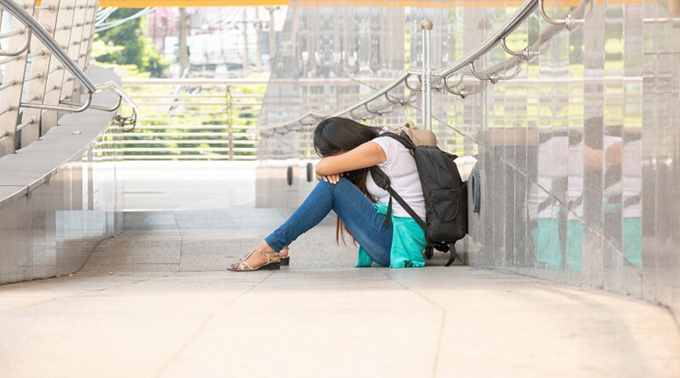
Three years after their initial enrollment in a bachelor’s degree program in 2020-2021, only 55% of high school graduates are still enrolled. In other words, nearly one in two young people experiences, at some point in their studies, an interruption, a change of direction, or a setback. During this period, the feelings experienced and the solutions considered tend to become individualized: each student faces their doubts, anxieties, and the search for possible paths to bounce back alone.
After a few months, disillusionment sets in, and loneliness in the student accommodation or on campus can become oppressive. Every year, at the end of the first semester, the “dropouts” —students who discover that the program they obtained through Parcoursup doesn’t meet their expectations or who are unhappy with their student life—resurface. Grades, midterms, and initial assessments force them to face the facts.
Schools are implementing new initiatives to try to address this. Several studies have shown that this phenomenon cannot be reduced to simple academic failure, as other factors are at play. Indeed, it is often a multi-causal phenomenon , where several elements combine during these first months of study.
Complex reorientation processes
For some of these young women and men, the long and often complex process of changing direction begins. Others enter a period of indefinite waiting, without a real plan, in the vague hope of finding their path, their place, or simply some direction. This is accompanied by a feeling of “being useless,” the impression of not having a place in this world. Marie, 20, explains her feelings after three months at Sciences Po:
“I had plenty of time to realize that the courses didn’t interest me as much as I thought they would, and on top of that, there wasn’t the student life or clubs to compensate. In January, I decided to quit my classes at Sciences Po, and at that point, it wasn’t much fun. I think it was the beginning of a depression, where I felt like nothing made sense, neither my studies nor society.”
For some young people, these doubts compound already fragile personal circumstances, marked by family problems, financial difficulties, difficult personal histories, or a past sense of unease that hinders their academic progress. It’s also a time when past vulnerabilities can resurface. Carine, who was enrolled in linguistics and is now a nurse, explains:
“So, I applied to nursing schools right after finishing high school, but I was on a waiting list, and I couldn’t see myself doing anything else… I had a university application, but I’m dyslexic and dysgraphic, so I knew I’d drop out immediately… Well, it depends on the place, but I knew there would be too many people and it wouldn’t work for my studies.”
The difficulty of identifying troubled youth
While the phenomenon of dropping out of school is visible and statistically quantifiable, solutions remain limited for these young people who leave the education system after only a few months. When they abandon their higher education, their paths become difficult to trace. Some engage in civic service , others find themselves in the category of “NEETs” (” not in employment, education or training “).
This division into different statistical categories makes it impossible to accurately track individual trajectories. Identifying these young people remains difficult, especially when they do not seek any public support services. Some may be able to change direction, but will have to “catch up” on the work from the first semester in the second. Support programs are often complex to access, lack visibility, or arrive too late to address this period of existential emptiness and feelings of failure .
Adding to the uncertainty experienced by students is another, more silent one, which affects their parents. After a trying final year of high school, marked by the pressure of the baccalaureate – where their children had the feeling of “playing for their lives” in each exam, the choices imposed by Parcoursup and the fear of failure, they find themselves facing their children in distress, who doubt their lives and themselves.
A time begins where everyone tries to figure out whether to encourage further studies, support a change of field of study, or finance (for those who can) a year while waiting for a new project.
Differences in social resources
Studies highlight the diversity of these young people’s paths and underscore the role of their social background in the likelihood of dropping out of school or, conversely, pursuing higher education. Family resources, personal histories, and the ability to envision the future shape profoundly different trajectories.
There is an individualization in the search for solutions. For those with sufficient economic and cultural resources, alternatives are considered: private preparatory courses, schools outside the Parcoursup system. Finding the right option becomes a rather solitary journey, where relational and financial resources are mobilized to begin the information hunt. Thus, these young people, supported by their families, devise a variety of approaches involving multiple professionals, such as psychologists and career coaches.
For others, from less privileged backgrounds, the situation is more difficult. Young people risk finding themselves without a clear solution, oscillating between precarious odd jobs (while they figure out what they want to do), long periods of waiting and, for a minority, support from public service structures.
A lack of clarity in the systems
We observe the difficulties faced by all parents when their children are unable to achieve their goals. Some lack the skills or resources to support them, while others have no ideas or knowledge of available resources. Young people, for their part, also experience common struggles, such as feeling “out of sync,” stuck in the collective race, and “behind” their peers.
Analysis of dropout rates after these first few months in higher education highlights the lack of clarity in support systems for young people who haven’t found their path or haven’t been able to get into their preferred programs. For some, this period will remain a simple adjustment. For others, it marks the first break in a longer and more irregular academic journey. This period sometimes leads to an increase in their addictions—alcohol, drugs, video games—and long-term uncertainty.
The start of higher education is not only the beginning of independence, but also an underestimated period of vulnerability. The feeling of academic failure crystallizes all of young people’s insecurities and plunges them into a sense of being alone in the world. They feel that others are moving forward while they remain stuck, unable to plan for the future, only plagued by questions like: What do I enjoy? What can I do? How can I succeed?
Author Bio: Sandra Gaviria is Professor of Sociology at the University of Le Havre Normandy
