
Today, playing video games has become a common leisure activity for many children and teenagers. Parents often wonder whether it’s appropriate to allow them to play as they please, how much time is advisable, and when. Should they play during the week or only on weekends? Should they play after homework or before, so they don’t rush through it?
They also mention how difficult it is to deal with children’s arguments: “If all my friends play this game, why can’t I?” Often, parents’ fear of their child being excluded from the group leads them to be more permissive than they would like regarding the times and types of games played.
In this way, they begin to allow video games to become a habit, even though they may be convinced or doubtful about whether it would be better for them to play other things, read, or go out more.
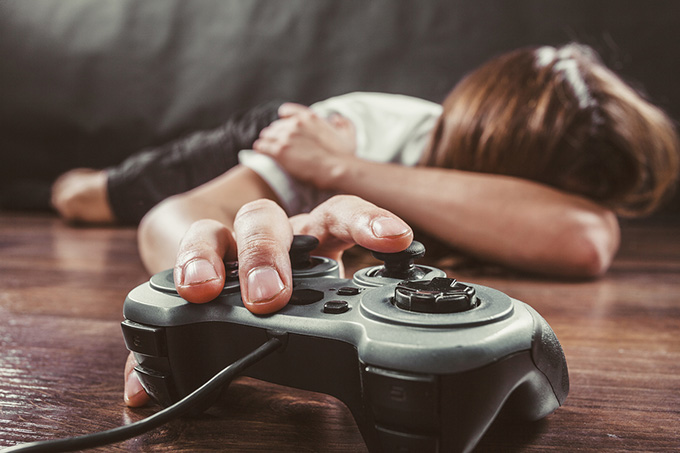
Thus, gradually, if limits are not set, an addiction develops . We may begin to observe a change in character: “they are more irritable,” “they do their own thing more than before,” “they seem not to care about anything,” “they go out less and less with friends.”
The most addictive video games are online role-playing games . These are multiplayer games where tasks are performed in teams, also known as guilds . They are designed using psychological techniques to keep players online for as long as possible. For example, the intermittent reinforcement found in loot boxes is the same mechanism used in slot machines.
The role of parents
When we notice our child starting to spend more time playing, it’s important to try to answer these three questions:
- Have you lost interest in activities you used to do (academic, extracurricular, going out with friends, helping at home…)?
- Do we know if something has happened in their “real” life that they need to escape from? If so, we’ll have to address the cause and, if necessary, seek professional help.
- Do you get irritated more often and become more easily offended?
After reflecting on these questions, we will focus on two essential concepts that guide how we position ourselves with respect to our children: emotional bond and authority (which is not the same as authoritarianism).
Bonds of trust and authority
The emotional bond refers to the ties of love established between parents and children, which form the basis for building trust and well-being. We speak of parental authority in relation to the responsibility of parents to make all the necessary decisions for the well-being of their sons and daughters. In fact, parental authority grants parents this right. This implies establishing rules, expectations, and boundaries, and at the same time, guiding and teaching children about acceptable behaviors and values, as well as protecting them from what is harmful.
On the other hand, “authority is something you have, not something you earn,” in the words of a friend of mine who teaches teenagers. It is something intrinsic to the role of being a parent, for whom it is both a right and a duty to exercise it.
What can we do to help him regain his well-being?
The first piece of advice is to have a calm conversation, including other family members who are important to him or her. We should avoid judgment and can show interest in their play and share what we have observed (loss of interest, change in character, less communication, etc.).
We can lovingly and decisively propose establishing rules and play schedules that preserve family spaces (nighttime disconnection time, meals together, household chores, etc.).
It is also helpful to provide alternatives to individual and family play, which may include activities with screens together.
We know that children care about the opinions their parents have of them, but what if they don’t want to listen to us and continue with their playful behavior?
When they don’t listen
When they don’t listen, it will be our responsibility to actively help them break free from the habit. It’s important to remember the principle of authority to prevent video game use from becoming an addictive behavior with serious implications for their health —cognitive, emotional, physical, and social.
Some parents who came to our clinic had tried all sorts of strategies to wean their 15-year-old son off video games. Until one day, they cheerfully and decisively removed the computer from his room and told him, “The computer’s gone on vacation.” They remarked that it was the best summer he’d had in years. The boy was grumpy for three days, but they quickly noticed a change in his demeanor. He began to regain the empathy he had seemingly lost and to pick up the interests he had set aside in recent months. During the consultation, they explained, “He’s back to his old self,” a common remark from parents who have gone through similar experiences.
However, we must bear in mind that this isn’t always possible, especially when we observe an escalation in aggression or when several attempts have failed to produce a change. We must also consider that various mental health disorders, such as ADHD or ASD, can predispose individuals to developing a video game addiction.
In these cases, it will be necessary to seek specialized psychological help to receive the necessary guidance and to be able to apply the appropriate strategies to help him, the sooner the better.
Author Bio: Dominica Díez Marcet has a PhD in Psychology and is a Clinical Psychologist in charge of the Behavioral Addictions Unit at the Althaia Foundation, Manresa University Healthcare Network. Also an Associate Professor at UVic-UCC at University of Vic – Central University of Catalonia
