
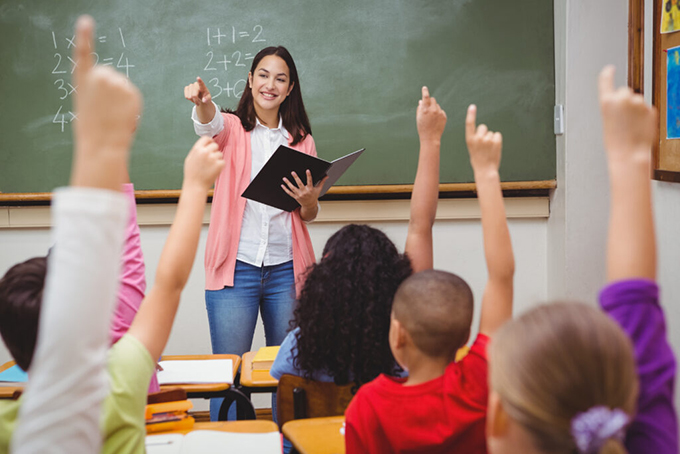
What does a “good student” do? They take notes, pay attention, and remain silent while the teacher explains: this would be a common response. That is, the teacher takes the lead, and the students remain passive. This is often considered the best model for getting good grades .
Active methodologies propose something different: learning based on student participation . The goal is to foster an active attitude, for which teachers must provide the necessary space. But would this change really improve performance?
In a recent study, we attempted to answer this question by focusing on the competencies of linguistic communication, English, mathematics, and science and technology. To do so, we used data from sixth-grade students in the Canary Islands .
The role of teachers
The sociology of education points out that teaching in a particular way not only impacts how people learn, but also influences the classroom climate. This translates into greater or lesser attention, respect, security, and trust.
In our research, we analyze how teachers behave; that is, the role they play in the classroom. Specifically, we differentiate between two teaching styles: directive, as an example of traditional teaching practice, and participative, as an active teaching practice.
We also considered two types of relationships: affective, that is, the emotional support students receive in the form of reassurance, respect, or listening. And educational, related to support in learning, such as answers to questions or advice on how to improve.
According to our results, teaching style influences the relationships between teachers and students. In particular, the participative style generates good relationships with students ; while the directive style does not .
What gives better results?
Based on the above, we wondered whether the teacher’s role affects student grades. Our results indicate that teachers who play an active role, grades are better than those who play a traditional role. In other words, having the space to participate in class and good relationships between teachers and students improve results.
Our data also highlight the importance of relationships in achievement, especially emotional relationships. Teachers’ emotional support plays a very important role in learning. That’s why it’s so important to pay attention to relationships with students.
It’s not enough to reflect on the way classes are taught; we must also pay attention to the impact the way the lesson is delivered has on students. Does the way the lesson is delivered encourage them to participate? Does it provide them with security and confidence? Does it stimulate their desire to learn?
Move it to the classrooms
These results support a greater presence of active methodologies in the classroom. Not only because they improve grades, but also because they promote student engagement and good relationships with teachers. In other words, the active role generates a much more positive classroom climate than the traditional role.
Bringing it into the classroom requires, first and foremost, the commitment of educational authorities, but also teacher training . Ultimately, increasing the presence of active methodologies requires new ways of teaching and interacting with students that not all teachers are familiar with and know how to apply.
Author Bios: Octavio Díaz Santana is Professor of Sociology, Maria-Eugenia Cardinal is Professor of Sociology and Sara María González Betancor is a Professor all at the University of Las Palmas de Gran Canaria
