
Will artificial intelligence put an end to work ? It’s one of the most frequently asked questions at conferences, media gatherings, and political forums. The promise made by the leaders of Silicon Valley’s major tech companies is clear: future artificial superintelligences will take over all kinds of jobs, and humans will be able to dedicate themselves to creativity, leisure, and a full life. A utopia with almost Renaissance overtones in which technological progress would open the doors to a new golden age for humanity.
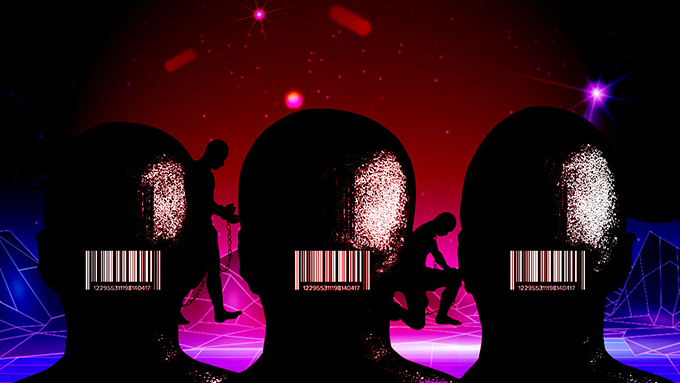
However, this triumphalist and simplistic narrative obscures a much more uncomfortable, rarely mentioned reality: millions of anonymous workers sustain the machinery of AI with their effort, suffering, and time. Artificial intelligence isn’t eliminating work: it’s transforming it , fragmenting it, and, much worse, making it precarious. Behind every generative model, every conversational assistant, and every image produced by algorithms, there are millions of invisible workers whose labor is essential for AI to function.
Far from the sugarcoated vision of an effortless future, AI is built on a present marked by the globalized exploitation of cheap labor.
The invisible workers of AI
They are the so-called data workers or “click workers,” people in charge of classifying and labeling images, correcting texts, transcribing audio, pointing out errors in machine translations, and, above all, cleaning up the ocean of data that feeds the algorithms.
Without them, the algorithms, which are then presented as intelligent, simply would not work.
As Mary Gray and Siddhart Suri explain , AI’s supposed intelligence is inseparable from the work of humans “behind the scenes.” Meanwhile, John P. Nelson points out that seemingly intelligent chatbots only exist because hundreds of thousands of people train, correct, and monitor their responses.
The chatbots that today respond to millions of queries daily are not the exclusive result of the talent of highly paid Californian engineers, but rather the exploitation of a massive, dispersed, and invisible workforce.
Sociologist Antonio Casilli sums it up succinctly: artificial intelligence is, in reality, intelligence of “sweat and tears.” Algorithms don’t learn by themselves; they simply reproduce patterns based on the previous work of millions of people.
According to World Bank estimates , between 4.4% and 12.5% of the global workforce (approximately 150 million to 425 million people) already participate in some way in this invisible digital economy. Google, in 2022, already estimated that this number could soon exceed one billion.
The Dark Side: Violence, Pornography, and Psychological Damage
The most disturbing aspect of this work is not only the precarious wages, but the type of content many workers must face. For an AI system to be able to recognize hate speech, someone must have read it, classified it, and flagged it as such. For a model to learn to filter out pornography, extreme violence, or pedophile material, someone must have first seen it.
Thousands of people in Kenya, the Philippines, Pakistan, and India spend entire days exposed to the worst of the human condition: threats of rape, descriptions of torture, and video recordings of murders. In an article in The Washington Post , Rebecca Tan and Regine Cabato document how these extreme working conditions are systematic and affect millions of workers around the world.
This continued exposure leads to devastating consequences: anxiety, depression, insomnia, and, in many cases, post-traumatic stress disorder that persist even years after leaving the job.
The French documentary Les sacrifiés de l’AI (“The Sacrifices of AI” (Henri Poulain, 2024) collects harrowing testimonies from workers who never recovered from the psychological damage. In many cases, they didn’t even have access to minimal therapeutic support, because the subcontracted companies that manage these tasks rarely offer psychological support. Silence is also enforced through confidentiality contracts that prohibit discussing work, even with close family members.
Global precariousness and working conditions
The location of this workforce is no coincidence. Large tech giants outsource these tasks to companies located in countries with low wages and weak social protection systems. The result is that the workers who underpin AI live in extremely vulnerable contexts. Ukrainian refugees, single mothers in Kenya, students in India, or prisoners in Finnish jails: all are part of a global production chain that operates under perfect conditions for the companies that hire them to circumvent labor regulations and social obligations.
The vast majority earn between $2 and $9 a day, work from home, isolated, without contact with colleagues or effective supervision, becoming a consumable part of a remote machinery.
It is a “digital proletariat” that reproduces, in new forms, the old logic of economic colonialism: profits accumulate in Silicon Valley, while the human costs are distributed in places like Nairobi, Bangalore, or Manila.
The scam of the century: image, lobbying and concealment
Companies leading the AI revolution are devoting enormous resources to bolstering their public image. OpenAI, for example, spent nearly $2 million on lobbying activities in 2024 .
The message they spread is clear: AI is the fruit of scientific innovation and the visionary investments of a handful of bold entrepreneurs. Nothing, however, is said about the millions of workers who keep this edifice alive in the shadows. Henri Poulain sums it up starkly in his documentary: we are facing “the scam of the century.”
A scam that only works because these invisible workers remain outside the media spotlight and because their social weight, although growing, still appears marginal in statistical terms.
But the bubble could be about to burst: as the use of AI multiplies, so does the number of people trapped in this diabolical data economy.
Long-termism, effective altruism and moral justification
One of the ideological elements that serves as an alibi for this situation is so-called long-termism . This philosophical movement, closely linked to so-called effective altruism , is presented as a paradigmatic example of how certain technological elites use the future as an alibi to ignore the present.
Proponents of this view, led by the controversial philosopher Nick Bostrom – who has developed the notion of existential risks and the moral priority of preserving humanity in the long term – argue that what is truly important is to ensure the survival of humanity over thousands or even millions of years ( sic ) and that, as we have noted before, technologies such as artificial superintelligence will make this possible.
According to this perspective, the moral value of the future would be immeasurably greater than any immediate concerns, so current problems such as poverty, inequality, and labor exploitation take a backseat. Effective altruism, in this context, becomes an intellectual tool to justify policies and decisions that prioritize false future benefits over present human and social costs. The formula is well-known: the end justifies the means.
This way of thinking has had a significant influence on most leaders in Silicon Valley’s tech industry. The problem is obvious: under this logic, millions of invisible workers may be sacrificed in the name of future generations, without even any real guarantee that this utopian future will ever materialize.
Dismantling the mirage
The triumphalist narrative about AI needs to be dismantled. It’s not enough to applaud technical advances or be seduced by the rhetoric of innovation. Behind the myth of artificial intelligence, millions of people are subjected to exploitation, psychological damage, and poverty wages. There’s also a planet that bears the environmental costs of an energy-intensive industry.
Intelligence isn’t found in machines: it’s found in the humans who train, supervise, and sustain them. What’s artificial isn’t intelligence, but rather the disguise that hides the relations of power and exploitation upon which this technology is built.
The real question is not whether AI will eliminate work, but whether we are willing to put an end to the precariousness that makes it possible today. If we want a fair future, technological innovation must be accompanied by corporate transparency, political regulation, labor protection, and collective ethical reflection. Otherwise, what awaits us is not the technological paradise so often promised, but a dystopia built on the sacrifices of artificial intelligence.
Author Bio: Ramón López de Mántaras is a Research Professor at the CSIC at the Institute for Research in Artificial Intelligence (IIIA – CSIC)
