
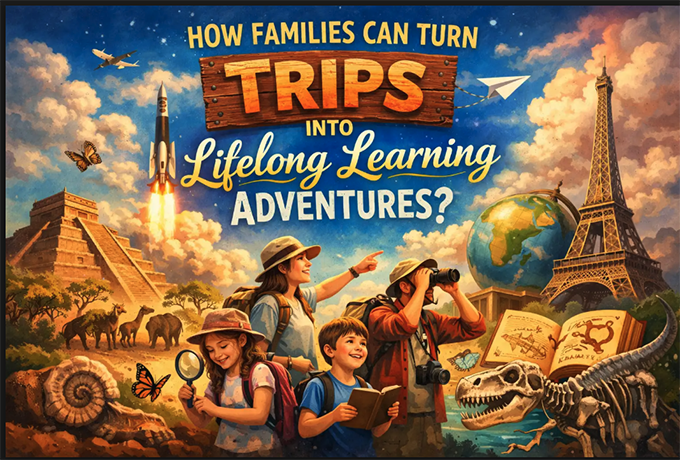
Family vacations are more than photo opportunities and hotel stays. They can become powerful
learning experiences that shape how children see the world.
When families travel with intention, every destination becomes a living classroom. History feels
real. Geography becomes visible. Culture becomes personal. Even simple moments, like
ordering food in a local market, turn into lessons that no textbook can fully capture.
The best part is that educational travel does not require expensive programs or rigid schedules.
It simply requires curiosity, conversation, and thoughtful planning.
Even small planning decisions, like researching local customs in advance or setting up an eSIM
for travel to stay connected and access maps or museum guides, can make the experience
smoother and more enriching for everyone.
This guide will show you exactly how families can turn ordinary trips into lifelong learning
adventures.
Why Travel Is One of the Best Teachers?
Travel naturally develops skills that children carry for life.
When kids explore new places, they:
● Learn adaptability
● Build communication skills
● Develop cultural awareness
● Improve problem-solving abilities
● Strengthen confidence
Unlike classroom lessons, travel engages all senses. Children see, hear, taste, and experience
learning in real time. That emotional connection makes lessons stick.
Start With a Learning Mindset
Before your trip begins, shift the focus from “vacation mode” to “exploration mode.”
This does not mean turning your holiday into school. It simply means being intentional.
Ask questions like:
● What can we learn from this destination?
● What is this place known for historically?
● What cultural traditions are unique here?
● What industries or natural features define the region?
When families set learning intentions early, children become active participants rather than
passive tourists.
Involve Kids in Trip Planning
Children are far more engaged when they help plan.
Give them age-appropriate responsibilities:
● Let them research one attraction.
● Ask them to pick a local dish to try.
● Have them locate the destination on a map.
● Encourage them to learn a few basic local phrases before the trip.
This builds anticipation and ownership. It also strengthens research and decision-making skills.
Turn Landmarks Into History Lessons
Historical sites offer incredible opportunities for storytelling.
Instead of simply visiting a monument:
● Explain who built it.
● Discuss why it was important.
● Connect it to global events.
● Compare it to similar landmarks in your home country.
For example, visiting a castle becomes a lesson in medieval life. Exploring an ancient ruin
opens conversations about early civilizations.
Storytelling makes history unforgettable.
Use Museums as Interactive Learning Spaces
Museums are powerful educational tools, but only if approached creatively.
Instead of rushing through exhibits:
● Choose one theme to focus on.
● Ask kids to find their favorite artifact.
● Invite them to ask curious questions about daily life in earlier times.
● Discuss how technology has evolved.
Many museums offer scavenger hunts or family guides. These tools transform passive viewing
into interactive discovery.
Make Nature the Classroom
Outdoor travel experiences are some of the most impactful.
National parks, beaches, forests, and mountains teach:
● Ecology
● Geography
● Conservation
● Climate awareness
Encourage kids to:
● Identify plants and wildlife.
● Observe weather patterns.
● Learn about local ecosystems.
● Discuss environmental challenges.
Nature-based learning builds respect for the planet and creates lifelong environmental
awareness.
Introduce Cultural Immersion Activities
True learning happens when families step beyond tourist zones.
Consider:
● Visiting local markets
● Attending community festivals
● Taking a cooking class
● Exploring neighborhood streets
Cultural immersion teaches:
● Respect for diversity
● Open-mindedness
● Communication skills
● Empathy
When children see how other families live, eat, celebrate, and work, they develop global
understanding that textbooks cannot replicate.
Turn Food Into a Geography Lesson
Exploring local cuisine is one of the simplest and most engaging ways to discover something
new.
Ask questions like:
● Why is this dish popular here?
● What local ingredients are used?
● How does climate influence agriculture?
● What spices are traditional?
You can even create a “food journal” where children rate dishes and describe flavors. This
develops descriptive writing skills and cultural awareness at the same time.
Encourage Travel Journaling
A travel journal transforms experiences into reflection.
Children can:
● Draw landmarks
● Write short daily entries
● Record new vocabulary
● List interesting facts
Journaling builds writing skills and memory retention. It also helps children process what they
have learned.
Younger kids can sketch. Older children can write paragraphs or even create short travel blogs.
Build Real-World Math Skills
Travel offers countless opportunities to practice math in practical ways.Children can:
● Convert currencies
● Calculate travel times
● Compare prices
● Estimate distances
● Manage a small daily budget
These activities build financial literacy and strengthen mental math skills in a meaningful
context.
Teach Responsibility Through Travel Roles
Assign small responsibilities to each family member.
Examples include:
● Navigator: Responsible for reading maps.
● Photographer: Documents daily experiences.
● Historian: Shares one fact about each place.
● Budget tracker: Monitors daily spending.
These roles encourage accountability and teamwork.
Use Technology Thoughtfully
Technology can enhance educational travel when used intentionally.
Families can use apps to:
● Translate languages
● Access historical guides
● Watch documentaries about destinations
● Track wildlife or constellations
However, balance is important. Encourage observation first, screens second.
Technology should support discovery, not replace it.
Connect Travel to School Subjects
Every trip can reinforce academic subjects.
Geography
● Locate destinations on maps.
● Discuss borders, terrain, and climate.
History
● Learn about local historical events.
● Compare timelines across countries.
Science
● Study local wildlife or geological features.
● Observe ecosystems in action.
Language
● Practice greetings in the local language.
● Learn simple conversational phrases.
Art
● Visit galleries or observe street art.
● Discuss architectural styles.
When travel connects to school learning, children see real-world relevance.
Encourage Questions, Not Just Answers
The most powerful educational tool during travel is curiosity.
Encourage children to ask:
● Why is this building designed this way?
● Why do people drive on this side of the road?
● Why is this language structured differently?
Instead of immediately providing answers, explore them together.
Research as a family. Discuss possibilities. Curiosity strengthens critical thinking.
Introduce Service-Oriented Experiences
If appropriate, consider community-based activities such as:
● Beach cleanups
● Cultural exchange workshops
● Volunteer tourism programs
These experiences teach:
● Gratitude
● Social responsibility
● Compassion
Children learn that travel is not only about receiving experiences but also about giving back.
Capture Memories Beyond Photos
Photos are important, but deeper memories come from conversation.
Each evening, ask:
● What surprised you today?
● What did you learn?
● What was challenging?
● What would you like to explore tomorrow?
Reflection strengthens understanding and emotional connection.
Teach Adaptability Through Challenges
Travel rarely goes exactly as planned.
Flights get delayed. Weather changes. Attractions close.
Instead of expressing frustration, use these moments as lessons in:
● Flexibility
● Problem-solving
● Emotional regulation
Children who learn to adapt during travel build resilience for life.
Create a Post-Trip Learning Project
The experience can continue long after you’ve unpacked your bags.
Encourage children to:
● Create a presentation about the trip.
● Build a scrapbook.
● Write a blog post.
● Cook a meal inspired by the destination.
● Research deeper into a topic they discovered.
Post-trip projects reinforce learning and help children reflect more deeply.
How Travel Builds Lifelong Skills?
Educational travel supports:
● Independence
● Confidence
● Communication
● Cultural awareness
● Critical thinking
● Global perspective
Children who grow up traveling mindfully often develop stronger adaptability and open-
mindedness.
They become comfortable in unfamiliar situations. They appreciate diversity. They understand
that the world is larger and more interconnected than their immediate surroundings.
Making Educational Travel Affordable
Families often worry about cost. However, learning-focused travel does not require luxury.
Consider:
● Road trips to nearby historical towns
● Visiting local museums
● Exploring regional parks
● Cultural festivals in your city
Even short trips can provide meaningful educational experiences.
The key is intention, not distance.
Balance Structure and Freedom
Too much structure feels like school. Too little planning reduces learning opportunities.
Aim for balance:
● Plan one major learning activity per day.
● Leave space for spontaneous discovery.
● Avoid overscheduling.
Children learn best when curiosity flows naturally.
Final Thoughts
Family travel has the power to shape how children view the world for the rest of their lives.
When trips are designed with curiosity and intention, they become far more than vacations.
They become immersive classrooms. They become empathy-building experiences. They
become confidence-building journeys.
Every corner of the globe holds new insights ready to be explored.
With thoughtful planning, open conversations, and a willingness to explore beyond the surface,
families can transform every trip into a lifelong learning adventure that children will carry with
them for decades.
And those shared discoveries often become the stories that families treasure most.
