
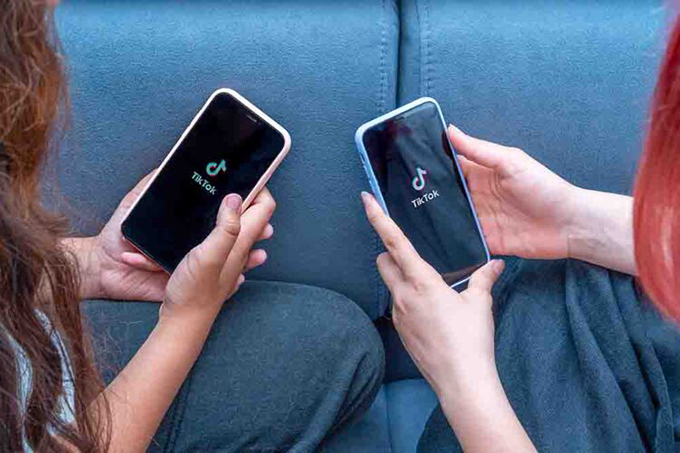
TikTok is one of the most popular social media platforms among teenagers. According to research, the platform is reshaping their attentional, emotional, and cognitive cues, with a significant impact on their mental health and self-development.
Testimonies from bereaved families have demonstrated the sometimes tragic consequences of unsupervised exposure. In November 2024, for example, seven French families sued TikTok, accusing the app of promoting content that encourages eating disorders, self-harm, and suicide, particularly targeting young users. Among these cases, two 15-year-old girls committed suicide, and four attempted to do so . These cases illustrate the risks of prolonged exposure to harmful content, especially since vulnerable users receive up to 12 times more deadly content (suicide and self-harm) and 3 times more “harmful” content (eating disorders, anxiety, etc.) .
In March 2025, a parliamentary commission of inquiry—to which we submitted a scientific report as part of a citizen contribution—examined the platform’s effects on young people’s mental health. It provided institutional recognition for findings previously confined to academic circles.
Beyond its symbolic significance, the commission of inquiry has brought several new elements to the forefront of public debate. It has highlighted the central role of algorithms in creating the psychological vulnerabilities of minors.
It also focuses the discussion on concrete operational proposals: strengthening parental control, time-based settings for usage, better education in criticizing digital environments, while bringing out certain reflections already known in the academic world such as the identity, gender and anti-Semitic norms conveyed by the platform.
But beyond the accepted findings—attention deficit disorder, mental fatigue, loss of self-esteem—one question remains: what do we really know about what TikTok does to teenagers? And what remains to be understood?
How TikTok captures the attention and shapes the identity of young people
As recent studies show , growing anxiety among young people is fueled by exposure to violent, sexualized, or humiliating content, as well as by a dynamic of continuous social comparison. This exposure generates a fragile narcissism based on appearances at the expense of being and fuels forms of behavioral addiction.
It is now clearly evident that by trapping young people in loops of anxiety-inducing or stereotypical content, the logic of personalization itself becomes a risk factor. The algorithm doesn’t just recommend: it structures attentional pathways based on each individual’s interactions, trapping young people in a spiral of emotional repetition.
But some research suggests a deeper analysis of TikTok beyond the content it broadcasts, by approaching it as a structuring mechanism. Concepts such as educational disintermediation, the inverted panopticon, and cognitive sovereignty allow us to think of platforms as environments that modulate attentional, identity, and social cues, often without users’ knowledge.
Work in cognitive and social psychology by Serge Tisseron and Adam Alter shows that technologies based on infinite scrolling and immediate reward disrupt attention and alter the relationship with emotion. In this case, TikTok acts as an emotional shortcut, replacing reflection with impulse.
Moreover, implicit norms of visibility, beauty, and virality impose an aesthetic of recognition that shapes self-representations. Research shows that they accentuate social comparison, anxiety, and self-esteem conditioned by digital validation, particularly among adolescent girls overexposed to filtered, often unrealistic models.
On TikTok, emotional, pseudo-scientific, and anxiety-inducing content circulates without hierarchy or educational mediation . This cognitive disintermediation, well documented in social media research , weakens young people’s critical capacities, where the influencer tends to replace the teacher.
This logic is analyzed in the evolutionary line of Jeremy Betham’s work on the panopticon , by the concept of computer-assisted panopticon of Laetitia Schweitzer and of inverted panopticon of Borel, from which we understand that in this case, young people monitor themselves in order to exist in the digital space.
When TikTok Replaces School: An Invisible Knowledge Crisis
Attention is often approached as a simple cognitive mechanism, but it is also – as Yves Citton , Dominique Boullier or Bernard Stiegler have shown – a strategic resource captured and exploited by digital platforms. In information and communication sciences (ICS), it is analyzed as a structuring social relationship, shaped by logics of continuous capture. It is therefore not only the concentration of young people that is at stake, but their relationship to time, presence and the possibility of critical thinking.
Self-construction on TikTok occurs through viral codes, aesthetic filters, and performative models. But what is the exact nature of this exposure? What does it mean to show oneself in order to exist, to conform in order to be visible? Few analyses understand TikTok as a device of identity injunction where the individual becomes the primary agent but also the primary product of their own visibility.
This is where we understand that the adolescent is profiled, influenced without his knowledge. He becomes, in this algorithmic dynamic, at once the spectator, the producer, and the commodity.
This logic stems from a state of surveillance : a form of gentle and invisible surveillance. The digital environment doesn’t impose anything outright, but rather subtly guides what one must be, show, and feel. This is a point that remains to be thoroughly documented among underage audiences.
Furthermore, TikTok doesn’t prioritize discourse . Testimonies, emotions, facts, stories, political discourse… all coexist in the same stream. This lack of differentiation between discourse regimes produces a persistent, ongoing cognitive confusion that young people end up integrating as the norm. The question of the veracity of information is no longer at the forefront. We are now more in functionality, in the number of views, of likes.
However, the progressive delegitimization of structured knowledge in favor of affective virality poses a major democratic challenge: it is the capacity of young people to discern, argue, contest – in short, to exercise their citizenship – which is weakened.
Finally, another rarely discussed dimension concerns the territorialization of algorithms. TikTok does not offer the same content or the same personalization logic depending on the country or cultural context. The algorithm reflects, and sometimes accentuates, inequalities in access to information or ideological priorities. This raises the question: who decides what young people see, feel, or think? And from where are these choices driven?
What TikTok reveals about our digital vulnerabilities
TikTok embodies the most powerful logics of contemporary digital technology: algorithmic capture, emotional personalization, identity exposure, and educational disintermediation. It is now important to understand how it operates, what it transforms, and what these transformations reveal about our own emotional vulnerabilities.
Far from moralizing or strictly regulatory approaches, an interdisciplinary reading invites us to rethink the question differently: how can we equip young people cognitively, socially and symbolically to face these environments?
The first diagnoses have been made. The effects are visible. But the concepts needed to properly consider TikTok have yet to be developed.
Author Bio: Fabrice Lollia is Doctor of Information and Communication Sciences, Associate Researcher, DICEN Ile de France Laboratory at Gustave Eiffel University
