
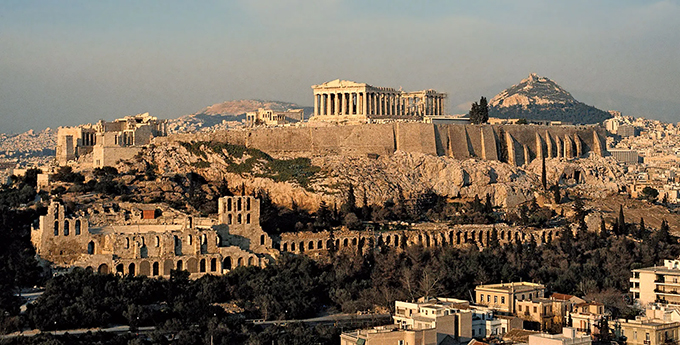
Today, our public spaces have moved online to digital feeds and social media forums. These spaces are mostly devoid of rules and community codes. Instead, algorithms decide which voices rise above the clamor and which are silenced.
The optimistic idea that the internet was a radically democratic space now seems like a distant memory. Our conversations are now shaped by opaque systems designed to maximize engagement, not mutual understanding. It is algorithmic popularity, not the accuracy or diversity of voices, that determines the reach of statements published online.
This has created a paradox. We enjoy unprecedented freedom of expression, but our discourse is constrained by forces beyond our control. Loud voices dominate. Nuanced voices are drowned out. Outrage spreads faster than reason. In this context, equal participation is virtually impossible, and speaking honestly can carry a very real risk.
Between the stone steps of Athens and today’s screens, we have lost something essential to our democratic life and dialogue: the balance between equality of speech and the courage to speak the truth, even when it is dangerous. Two ancient Athenian ideals of freedom of expression, isegoria and parrhesia , can help us rediscover it.
Ancient ideas that still guide us today
In Athens, isegoria referred to the right to speak, but it was not limited to a simple right. It represented a shared responsibility, a commitment to fairness, and the idea that public life should not be governed solely by the powerful.
The term parrhesia can be defined as boldness or freedom of expression. Here again, there is a nuance: parrhesia is not reckless frankness, but ethical courage. It referred to the duty to speak the truth, even when it caused discomfort or danger.
These ideals were not abstract principles. They were civic practices, learned and strengthened through participation. The Athenians understood that democratic discourse was both a right and a responsibility, and that the quality of public life depended on the character of its citizens.
The digital sphere has changed the context, but not the importance of these virtues. Access alone is not enough. Without standards that support equal voices and encourage truth, freedom of expression becomes vulnerable to distortion, intimidation, and manipulation.
The emergence of content generated by artificial intelligence (AI) intensifies these pressures. Citizens must now navigate not only among human voices, but also among those produced by machines that blur the lines between credibility and intention.
When being heard becomes a privilege
On contemporary platforms, visibility is distributed unevenly and often unpredictably. Algorithms tend to amplify ideas that evoke strong emotions, regardless of their merit. Already marginalized communities may find themselves ignored, while those that thrive on provocation may dominate the conversation.
On the internet, isegoria is being challenged in a new way. Few people are formally excluded, but many are structurally invisible. The right to express oneself remains, but the possibility of being heard is unequal.
At the same time, parrhesia is becoming more precarious. Speaking honestly, especially on controversial issues, can expose individuals to harassment, distortion, or damage to their reputation. The price of courage has increased, while the incentives to remain silent or retreat into echo chambers have multiplied.
To educate citizens, not spectators
The Athenians understood that democratic virtues don’t arise spontaneously. Isegoria (public discourse) and parrhesia (public speaking) were maintained through habits acquired over time: listening was considered a civic duty, speaking a shared responsibility, while recognizing that public life depended on the character of its participants. In our time, it is through civic education that citizens put into practice the dispositions required by democratic discourse.
By transforming classrooms into small-scale agoras, students can learn to navigate the ethical tension between equality of voice and integrity of speech. Activities that encourage shared dialogue, equitable participation, and attention to the quietest voices help them experience isegoria , not as an abstract right, but as a lived practice of fairness.
In practice, this takes the form of discussions and debates in which students must verify information, formulate and justify arguments, revise their opinions publicly, or debate respectfully with opposing arguments. All these skills cultivate the intellectual courage associated with parrhesia .
It is important to note that these experiences do not dictate what students should believe. Rather, they allow them to practice habits that make them accountable for their convictions: the discipline of listening, the willingness to present their arguments, and the readiness to refine their position in light of new knowledge. Such practices restore the sense that democratic participation is not only linked to individual freedom of expression, but is relational and built through collective effort.
Ultimately, what civic education offers is practice. It creates miniature agoras where students practice the skills they need as citizens: expressing themselves clearly, listening generously, questioning received ideas, and engaging in dialogue with those who think differently.
These habits counterbalance the pressures of the digital world. They slow down conversation in spaces designed for speed. They introduce reflection into environments designed for reaction. They remind us that democratic discourse is not a performance, but a shared responsibility.
Rediscovering the spirit of the agora
The challenge of our time is not only technological, but also educational. No algorithm can teach responsibility, courage, or fairness. These are qualities acquired through experience, reflection, and practice. The Athenians understood this intuitively, for their democracy rested on the ability of ordinary citizens to learn to express themselves as equals and with integrity.
We face the same challenge today. If we want digital public spaces that support democratic life, we must prepare citizens to use them wisely. Civic education is not an optional enrichment; it is the training ground for the habits that uphold freedom.
The agora may have changed form, but its purpose remains. Speaking and listening to one another as equals, with honesty, courage, and care, remains at the heart of democracy. And that is something we can teach.
Author Bio: Sara Kells is Director of Program Management at IE Digital Learning and Adjunct Professor of Humanities at IE University
