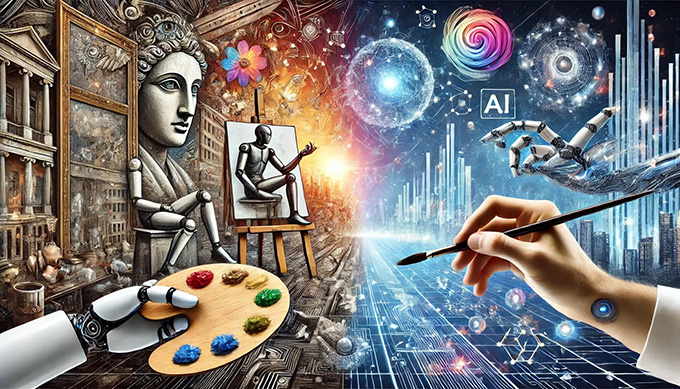
Advertising, fashion, and design. Theater, film, music, and video games. Visual arts, sculpture, and painting. Heritage management and cultural tourism. The cultural and creative industries (CCI) are undergoing rapid change with the emergence of artificial intelligence.
On the one hand, new opportunities for improvement are created. On the other, significant challenges arise for employees. Artificial intelligence can mimic human intelligence to analyze data, recognize patterns, and make decisions. In the cultural industries, artificial intelligence improves efficiency, personalizes experiences, and fosters creativity.
According to data from Eurostat and the European Commission , the creative industries employed more than 8.7 million people in mid-2023. This represents 3.8% of European employment in a sector where innovation and originality are essential.
Impact of AI on the creative industries
In the field of advertising, AI tools improve the results of advertising campaigns. More precise audience analysis allows you to identify ideal customers and then reach them by sending personalized messages.
In architecture and engineering, artificial intelligence facilitates design work and improves project efficiency through advanced simulations . This type of software allows complex 3D designs to be remodeled and sustainable decisions to be made in minutes. As Lászlo Moholynagi rightly says, ” Design is not a profession, it’s an attitude . “
In audiovisual
Regarding movies and music, digital platforms use AI to analyze their users’ tastes and preferences. This allows them to offer them a tailored offering, created based on their viewing history.
This is how they build loyalty among their users by recommending what the algorithm believes matches their tastes . If you have a family account on one of these platforms, try checking the homepage of each member and you’ll see how the offerings differ for each one.
The use of artificial intelligence by video game developers is growing. Its usefulness? For example, the use of adaptive algorithms allows challenges to be adjusted to the player’s level: from enemies that adapt to the user’s level to interactive stories . AI allows repetitive tasks to be automated and saves costs.
Cultural heritage, artificial intelligence
Virtual reality allows for virtual visits to museums and tours of historical sites. This makes heritage more accessible to everyone.
In the museum sector, the application of augmented reality or virtual reality programs enhances the public’s experiences and how they interact with works of art.
The University of Glasgow is developing a digital platform that will display 3D models of works held in Scottish museums . Large museums can only display a portion of their collections, so the underlying idea is to remove spatial limitations through virtual reality and give greater visibility to art collections.
In fashion and design, AI helps predict trends , create more sustainable collections (by maximizing the use of materials), improve supply chains, and manage inventory, among other tasks.
For example, the AI4FIBRES project —developed by Kingston University, the Royal Opera House charity, and two textile waste management companies—proposes the use of AI for materials recycling, efficiently sorting and processing textile waste, increasing recycling rates, and reducing landfills.
The debate opens
The integration of artificial intelligence into the cultural industries frees professionals from the most repetitive tasks and allows them to focus on other, more creative functions .
An example: AI has the ability to transcribe, translate, or subtitle cultural content (texts, audio, and audiovisual productions), facilitating rapid and globalized access to cultural content. However, this also generates controversy, both due to the reliability and quality of the final product and the risks to future employment in the sector and the protection of copyright and users’ personal data .
Author Bio: Silvia María González Fernández is a Substitute Professor in the Business Organization Department at the University of Oviedo
