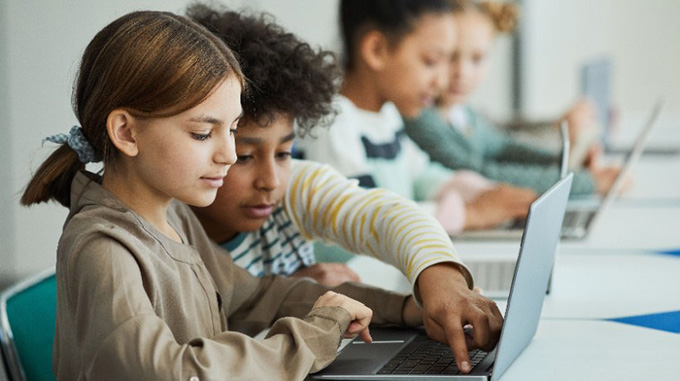
For today’s children and teenagers, the boundary between formal learning and media consumption has blurred: platforms like TikTok, YouTube, and Instagram are not mere pastimes, but primary spaces for socialization, identity building, and access to information .
This “youth media diet,” composed of viral videos, memes, trends , and fragmented news, is the primary cultural matrix for new generations. How should schools address it? Ignoring or rejecting this content, dismissing it as a distraction, creates a gap between school and students’ lives. Furthermore, it leaves young people defenseless against the challenges of misinformation, stereotypes, and emotional manipulation that proliferate in environments without editorial filters.
Digital literacy is not about teaching how to use technological tools, but about developing individuals capable of understanding, questioning, and transforming the discourses they consume and produce. Thus, international organizations such as UNESCO define it as “media and information literacy” and consider it essential for personal development.
Bringing the content to school
Projects driven by institutions like Fad Juventud promote gamified educational activities to foster critical thinking among teenagers. A prime example is the ERASER project , an interactive adventure designed for secondary schools, high schools, and vocational training centers.
In this playful environment, students take on the role of “digital detectives,” confronting real-world cases of disinformation. Through videos, social media posts, and viral audio, they apply fact-checking techniques, identify hoaxes and deepfakes , and analyze digital manipulation strategies.
Deconstructing a viral video
By using, for example, a viral TikTok video in the classroom, the teacher can break down complex and essential concepts for critical thinking such as:
- Authorship and credibility: Who is behind this message? What is their intention (to inform, persuade, sell)? Are there credentials to support the information?
- Audiovisual language: What editing techniques, music, or framing are used to manipulate or influence the viewer’s emotions?
- Biases and algorithms: Why does the platform show me this specific content? How does algorithmic logic shape our “information bubble” and bias our worldview?
This approach transforms passive consumption into an exercise in deep reflection, shifting the focus from technical literacy (knowing how to use the device) to critical understanding (knowing how to interpret and question the content), demonstrating that this is not a theoretical proposal, but a feasible practice.
Approaches from different subjects
In this sense, a Language teacher can work with influencer videos to analyze persuasive discourses, while a Social Sciences teacher can explore how identities are constructed or conflicts are represented in memes and viral clips, linking digital content with curricular topics.
By giving students the role of content producers or analysts, a greater awareness of their role in the digital ecosystem is developed.
Curriculum and family
For this transformation to succeed, a partnership between schools and families is essential. Teachers need specific training in critical digital skills that goes beyond software operation and helps them understand the languages, dynamics, and risks inherent in digital environments. It is also necessary to incorporate the analysis of digital content into lesson planning, promoting discussions on ethical and social issues present on social media and using critical thinking rubrics.
For their part, families can move from censorship or indifference to active mediation. Conversation and family trust are cornerstones for the development of digital autonomy. Questions like “What have you learned on TikTok today?” or “Why do you think this influencer is saying that to you?” open up a crucial dialogue.
From passivity to participation
Teaching children to understand digital content is not an optional task, but an urgent educational responsibility. Twenty-first-century pedagogy must integrate the digital languages, habits, and dynamics that are part of children’s and adolescents’ environment, transforming them into educational tools within the classroom of the future.
The key lies in transforming consumption into analysis, reproduction into creation, and passivity into conscious participation. This will make it possible to cultivate generations with the intellectual compass necessary to navigate the vast digital world with autonomy, critical thinking, and civic engagement.
Author Bio: Pedro Adalid Ruiz is a University Professor of Educational Quality Policies and Improvement Plans at CEU San Pablo University
