Medical training is a journey filled with emotions. Throughout the course, students encounter the emotional complexity stemming from the effects that the process of illness and healing can have on patients.
This process occurs simultaneously with the student’s personal and professional development, as they seek mechanisms to adapt to this complex emotional reality.
Research shows that around 25% to 30% of medical students experience depressive symptoms. And the burnout rate among doctors exceeds 50%.
These data, derived from meta-analyses with a large sample base, show a consistent pattern of high levels of psychological distress throughout medical training, with direct implications for academic performance, professional identity, and future clinical practice.
Although the medical curriculum includes subjects such as ethics and psychology, the formal space dedicated to preparing future professionals to recognize and manage their own emotions remains limited.
In parallel, there is a ” hidden curriculum .” A set of norms, values, and attitudes transmitted informally in the academic environment, often contradicting the principles of the formal curriculum.
In it, one learns that a good doctor should be cold and distant. Someone who doesn’t show emotions. This notion is supported by observing the behavior of teachers and supervisors who frequently demonstrate a discouragement of expressing feelings.
Thus, the young person who enrolled in the course with a genuine desire to care, gradually becomes disconnected from their emotions.
Emotions can qualify doctors.
I belong to a group that disagrees with this view. We believe that emotions can qualify a doctor. If medical practice is inevitably composed of emotions, suppressing them does not eliminate them. It only silences them and keeps them outside of any process.
The question, therefore, is not whether medicine should or should not deal with emotions, but how to promote emotional development.
Several authors have demonstrated that the emotional development of medical students can improve clinical decision-making and promote the well-being of both doctors and patients.
However, there is no definitive theoretical framework on how to promote this emotional development.
Recent studies indicate a promising potential for fostering emotional development through the use of art-based educational activities, including music.
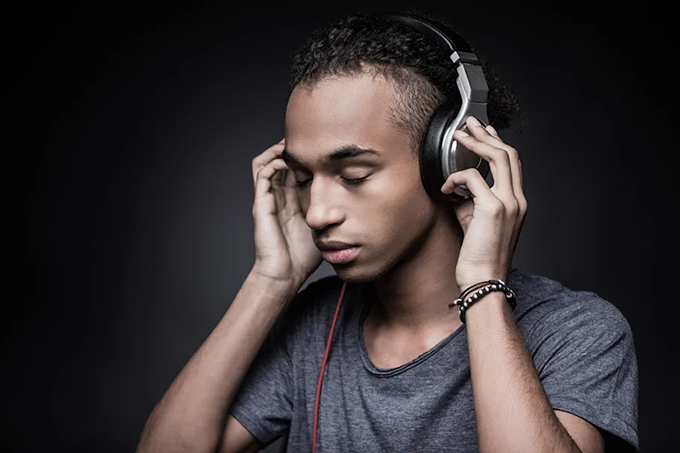
Music has been widely recognized as a powerful tool in the educational field. Listening to music activates brain plasticity by stimulating neural circuits that enhance cognition and promote emotional perception.
The integration of emotion and cognition enables a deeper reflective process for the student. Furthermore, it expands their ability to deal with ambiguity and, in this way, promotes the development of critical thinking.
This expansion of cognition also broadens the educational experience, making it more dynamic and full of meaning.
Emotions in medicine
It was in this context that our group, composed of researchers from the State University of Rio de Janeiro (Uerj) , Unicamp , and the Federal University of the Southern Frontier (UFFS) , in collaboration with the University of Groningen , in the Netherlands, developed the course “Emotions in Medicine”.
The proposal was simple and, at the same time, innovative. The idea was to use a music-based educational activity to promote the recognition, expression, and regulation of emotions.
For four weeks, 124 students participated in meetings where they listened to and analyzed songs by artists such as Milton Nascimento , Caetano Veloso , Criolo , Coldplay , and Pink Floyd .
Through reflection on lyrics, rhythms, and melodies, they were invited to identify emotions evoked by the music. Furthermore, they were invited to draw parallels with situations experienced in clinical practice.
The environment was structured to ensure psychological safety and allow personal and professional experiences to be shared without judgment.
In addition to reflection, participants practiced emotional regulation strategies, which are skills associated with the ability to recognize, understand, and modulate emotions in stressful situations.
To analyze the impact of this pedagogical activity on the emotional development of medical students, we conducted a prospective multicenter study.
We used a quantitative methodology to compare the students’ levels of emotional intelligence before and after the activity.
Next, we conducted a second study. Using a qualitative methodology , we performed a reflective and inductive thematic analysis.
The objective was to explore how pedagogical activity based on the concepts of emotional regulation and music influenced the emotional development of medical students.
The reunion with the purpose of caring
At the end of the research, we observed a significant improvement in the participants’ emotional intelligence indicators.
In qualitative interviews, students reported that the experience fostered interpersonal connections, normalized the presence of emotions in medical practice, and, for many, represented a rediscovery of the original purpose of caring.
By encouraging students to recognize, express, and regulate their emotions, the activity countered the emotional suppression prescribed by the hidden curriculum.
Music has been used in hospitals as a therapeutic resource for patients. However, perhaps it is time to recognize that doctors also need tools to understand and process their own emotions.
It’s not about replacing technical rigor or clinical rationality, but about broadening training. And including emotional competencies that underpin complex decisions, communication skills, and compassionate care.
By offering students a space to explore, reframe, and embrace their emotions through an activity that combines music and emotional regulation, we provide an innovative path. In it, we integrate reason and emotion.
Given the increasing indicators of psychological distress in medical training, investing in emotional development can be a strategy for professional sustainability.
Preparing technically competent doctors is essential. Equipping them to also deal with the emotions inherent in caregiving can be crucial for preserving both the quality of care and the health of those providing care.
Author Bio: Marcelo Bueno da Silva Rivas is Adjunct Professor of Medicine – UERJ at the State University of Campinas (Unicamp)
