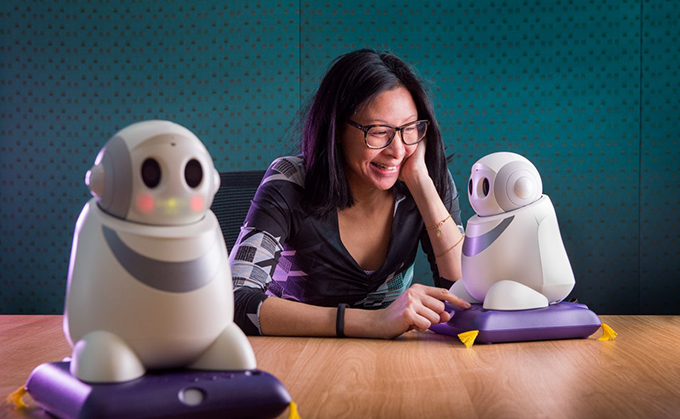
The way we communicate with machines can make work more efficient or more exhausting. In today’s factories, the key is for technology to learn to understand us so that collaboration between people and robots becomes a reality. The real challenge is not just producing faster, but doing so in a more human way.
Although the industrial sector is experiencing a veritable race toward automation, the International Federation of Robotics (IFR) warns that automation fell by 8% in Europe in 2024. Perhaps the next step is not to have more robots, but to improve how we interact with them.
Bridges that unite us
Interfaces are the most important point of contact between people and robots: a shared language that translates our commands and the machines’ responses. When that language is unclear, collaboration becomes more demanding and mentally exhausting, and work loses its fluidity.
For decades, communication with industrial systems has primarily relied on visual interfaces: instructions displayed on a screen that the operator interprets to take action. Today, however, we have far richer options: multimodal interfaces, which combine voice, sight, or even touch to create a more natural and fluid interaction.
This evolution is not accidental. It responds to the need for technology to be better adapted to people and more intuitive.
A more human perspective
While companies like KUKA, ABB, and Fanuc refine automation, our research at Mondragon Unibertsitatea seeks to remind us of something essential: it’s not enough to build faster robots; we must design robots that better understand people. And that understanding ultimately translates into greater efficiency.
To test how the way of communicating with robots influences the outcome, we conducted an experiment in the Mondragon Unibertsitatea laboratory with twenty participants who had to complete an industrial disassembly task alongside a collaborative robot, the KUKA LBR iiwa .
The movie tag contains https://www.kuka.com/es-es/video?videoid=6c5657b6a6ea4c15b3130791d9a736e0, which is an unsupported URL, in the src attribute. Please try again with youtube or vimeo.
In one scenario, the robot communicated solely through a visual interface. In the other, we added voice, creating a multimodal interface that combined visual and auditory information.
During the process, we measured both the participants’ performance and subjective experience using the HUROX questionnaire . We also recorded their brain activity using electroencephalography (EEG) to analyze mental workload and emotional state.
What were the results?
When people interacted with a multimodal interface, their workload decreased significantly and their emotional state was more positive. In other words, working with a robot that combines voice and image was more comfortable, smoother, and less tiring.
Brain scans confirmed what participants expressed in their assessments: this form of interaction helps maintain attention without overwhelming the mind. People described the communication as more natural, safer, and more satisfying, pointing to an overall improvement in the human-robot experience.
One of the most encouraging findings was that no significant differences were observed between men and women in how they adapted to the interfaces. (However, in the technological and industrial sectors, inequalities persist: women continue to be underrepresented in STEM careers, design roles, and technology decision-making. Incorporating their voices—and those of people with diverse identities—will not only prevent bias but also improve design for all of society.)
The results beyond the laboratory
In an industrial context where automation is advancing rapidly, understanding how people feel when working with robots is just as important as measuring productivity. It’s about committing to technology focused on human well-being, where efficiency isn’t achieved at the expense of exhaustion or emotional disconnection.
Designing interfaces that reduce mental workload not only improves performance but also enhances work quality and safety. When an operator doesn’t have to memorize every step or interpret ambiguous signals, they work with more confidence and make fewer mistakes. Similarly, when communication with the robot is more natural—by hearing its voice or seeing clear signals—the interaction becomes less impersonal and more collaborative.
Ultimately, the most advanced technology will not be the fastest, but the one that best understands the people who use it. This more human and inclusive approach invites us to rethink the future of the industry from the perspectives of cognitive ergonomics, equal opportunities, and social well-being.
Technology accessible to everyone
Multimodality can be a powerful tool for improving accessibility. By combining voice, vision, or even touch, it makes it easier for people with different sensory or cognitive abilities to interact with robots more equitably.
An interface that speaks and displays visual information, for example, can help both those who are hard of hearing and those who need visual or verbal support to better understand an instruction.
Thus, designing multimodal systems not only improves efficiency: it expands opportunities for participation in industrial environments and makes technology adapt to human diversity instead of demanding the opposite.
Inclusive technology is not just a technical issue, but an ethical and social imperative. It implies recognizing that true equality is still under construction and that the robotics of the future must contribute to achieving it, not expanding it.
The new industry invites us to work towards a new balance: one in which robots bring precision and strength and people remain at the center, with their creativity, their judgment and their humanity.
Author Bios: Ainhoa Apraiz Iriarte is a Lecturer and researcher in Innovation in Industrial Design, specializing in Interaction Design and Technological Acceptance in Robotics, Ganix Lasa Erle is a Lecturer and researcher at Diseinu Berrikuntza Zentroa (DBZ), specializing in Interaction Design and Technology and Maitane Mazmela Etxabe has a PhD and is a Researcher and Lecturer in Industrial Design all at Mondragon Unibertsitatea
