The Trump administration has made combating immigration a domestic policy priority. Beyond the shocking images of arrests, the reality is more complex, particularly for immigrants with highly specialized scientific skills. America’s scientific and technological supremacy continues and will continue to depend on its ability to attract the world’s top talent.
President Trump is mass-deporting undocumented immigrants and attempting to undermine the right of birthright citizenship for children born in the United States to parents who do not officially reside there. He is also targeting foreign students at the most prestigious universities. This is one of the president’s means of forcing them to accept his administration’s interference in the academic and scientific research spheres. This administration is thus attempting to obtain the dismissal or halting of the recruitment of certain high-level American and especially foreign scientists.
Widely publicized, these attacks should not make us forget that a significant proportion of immigrants present today in the United States are highly educated, according to the American Community Survey (available on the USA IPUMS from which most of the data in this article is taken). Will President Trump also close the United States’ borders to them? Or, on the contrary, will he limit himself to making a selection, between those who, deemed indispensable to the proper functioning of the economy, will benefit from all the protections and all the material advantages, while the others will be increasingly rejected?
The great turning point of the 1960s
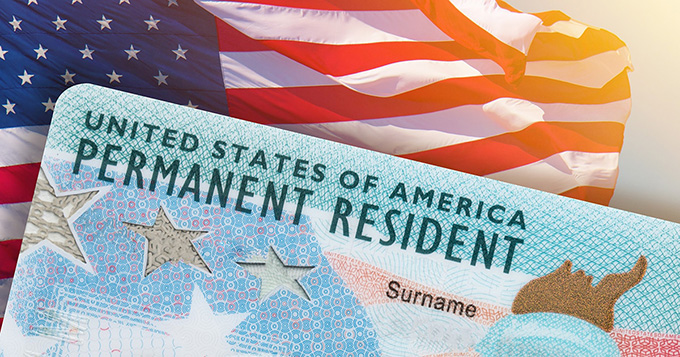
The history of brain drain (the attraction of brains), particularly Europeans, to the United States is ancient. The major turning point in immigration policy occurred in 1965. Democratic President Lyndon Johnson wanted the United States to once again become a “land of welcome.” To this end, new legislation was adopted to promote family immigration and, especially, that of people with exceptional qualifications or skills. They were offered the possibility of obtaining a right of permanent residence, also called a Green Card.
Furthermore, people with at least a bachelor ‘s degree (license) – in practice a master’s degree was required – could obtain a temporary work visa of three to six years, followed, if necessary, by the green card.
Since then, this legislation has undergone numerous adaptations, but has not fundamentally changed. Its effects, until 2024, have been gradual and massive. It should be noted that the American Community Survey considers any person born abroad to be an immigrant. In 1980, these immigrants of full working age (25 to 64 years old) represented 7.2% of the population residing in the United States. In 2020, they constituted 19% of this population. A portion of this population, especially of Latin American origin, had a very low level of education. Indeed, 84% of the latter had a level of education less than or equal to a high school diploma.
Graduated immigrants
However, many immigrants admitted in the 1980s and 1990s were increasingly highly educated. Since then, their qualifications have steadily increased. In 2020, among the entire immigrant population, there were more holders of a postgraduate degree ( master’s or doctorate) than among the population of US origin. As a result, immigrants represented a third of people residing in the United States who held a doctorate.
This observation deserves to be put into perspective. While graduates in science, technology, and management disciplines represented the vast majority of immigrants admitted to reside and work in the United States, graduates in social sciences, literature, and the arts were far fewer in number.
Europeans, Chinese and Indians
Three immigrant groups stood out for their particularly high level of education. First, in ascending order, there were 1.5 million Europeans from the 27 countries of the European Union, belonging to this fully active age group; 30% of them held a postgraduate degree . The prize went to the French , numbering 120,000; 52% of them held a postgraduate degree .
Then, a second group of highly educated people were the Chinese, numbering 1.9 million for this age group; 37% of them had a postgraduate degree . Finally, the group of Indian immigrants was the largest with 2.8 million people, of whom 43% had such a degree.
This is evidenced by some well-known figures, such as the French Yann Le Cun and Jérôme Pesenti, who held high positions at Meta, while Joëlle Barral was director of fundamental research in artificial intelligence (AI) at Google Deep Mind. As for Fidji Simo , she became, in 2024, general manager of applications at Open AI. Sundar Pichaï at Google or Shantanu Narayen at Adobe System illustrate the presence of Indians.
Data from the U.S. Immigration and Customs Service shows that tech companies are the ones that receive the most visas to employ highly skilled immigrants. The ” magnificent seven “: Google, Amazon, Facebook, Apple, Microsoft, Nvidia, and Tesla lead the way. Each of them receives thousands of visas each year to hire highly educated foreigners .
Immigrants in the highest positions
Generally speaking, immigrants are numerous in the upper echelons of these organizations. This is evidenced by their position in the salary hierarchy. For example, in the electronics manufacturing sector (including Apple), the top 5% of employees earn an annual salary equal to or greater than $220,000. Of these, 38% are immigrants. Similarly, in the communications and social media sector (including Facebook), 5% of employees earn an annual salary equal to or greater than $310,000. Among them, 33% are immigrants. In higher education, 26% of the top 5% are immigrants.
The long history of brain drain to the United States is far from over, despite possible upheavals, as demonstrated last December by the dissensions within the MAGA camp .
Made in the USA and its economy cannot survive without employing foreigners. Whatever political developments occur in the coming years, governments will continue to prioritize their country’s supremacy in these areas . The immigration policy of Trump and his successors will leave the borders wide open to foreign scientists and managers, as they have been for the past sixty years.
Targeted attacks by D. Trump
Donald Trump’s attacks on science should not be misleading. His fight concerns the disciplines and scientists whose work and demonstrations oppose his ideology, whether it be climatology, parts of medical science, or almost all of the social sciences (gender studies, inequality, discrimination of all origins).
Its policy is based on an instrumental conception of science and scientists, rejecting those who do not serve its economic interests and ideological choices. If they are foreign, they risk expulsion. The others, indispensable to tech companies, are welcome in the United States and will remain so, because there is now intense competition in these globalized employment markets for “talent,” to use the expression popularized by OECD publications. This competition will continue and become more intense.
This situation should be of greater concern to European and French governments. The brain drain from the EU is likely to continue, or even increase. OECD data highlights the inadequacy of French investment in research and development (R&D), at the same level as the EU average (2.15% of GDP), and well below that of the United States (3.45%). This low investment concerns both public and private research. Over the period 2013-2024, US companies invested $470 billion in AI , German companies $13 billion, and French companies $11 billion. This shows, in this promising field, how decisive the attractive power of the US economy is.
Author Bio: Dominique Redor is Professor Emeritus at Gustave Eiffel University, Researcher affiliated with the Center for Employment Studies, CNAM at the National Conservatory of Arts and Crafts (CNAM)
