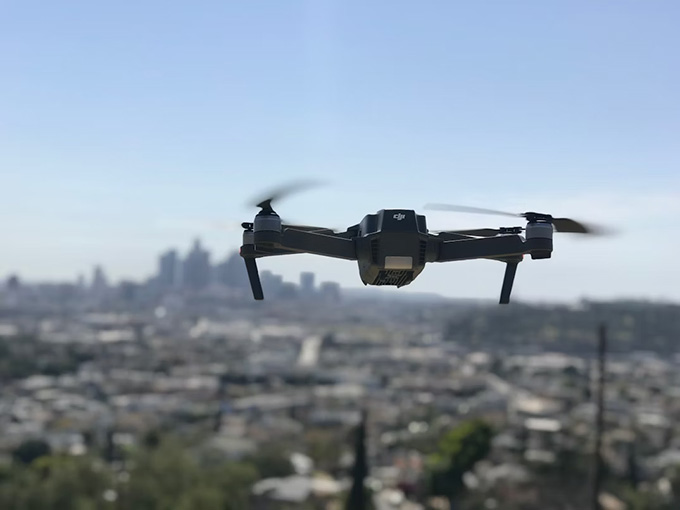
Do you want to know how drones are being used in urban planning?
Everyone in urban planning wants better, more precise data for smarter infrastructure and city development decisions. After all, improved mapping directly leads to:
- Better allocation of resources
- More efficient city building
However…
Mapping cities hasn’t changed all that much since the days of land surveying with traditional tools. Manual methods are slow, labor-intensive, and expensive. Even worse, by the time you have a completed map, the data is usually already outdated.
If you really want to transform urban planning, drone surveying and mapping technology is the only way to go.
Without cutting edge mapping, you’re flying blind.
In this comprehensive guide, I’m going to show you how drones are transforming city mapping. If you’re still on the fence about drones for urban planning, you need to check this out.
Let’s get going!
What you’ll learn:
- Why Do Cities Need Drone Mapping?
- What Makes Drone Mapping Different for Urban Planning?
- 5x Ways Drones Are Transforming City Development
Why Do Cities Need Drone Mapping?
Drones offer huge benefits for urban planners. If you’re still not using drones for city mapping, here’s a few reasons you need to.
Get High-Quality Data Quickly
Drones can collect data up to 20x faster than traditional land-based survey teams.
Why? Well, drones can cover much larger areas in a single flight, while collecting super high-resolution data from the air. Standard surveying methods take months. Drones? They can map entire neighborhoods in a matter of hours.
In fact, according to this study by the European Commission, urban mapping projects that use drones achieve up to 90% time savings.
Save Massive Amounts of Money
Traditional surveying gear and equipment can cost between $10k and $30k. The entry-level price for professional-grade enterprise drones starts around $5k.
Compared to land-based methods, drone mapping can save you anywhere from 30-50% on your total costs. Labor, time-to-completion, and data processing costs all go way down.
Side note: Cities require periodic mapping updates, so these cost savings really add up over time.
Keep Up With Urbanization
Did you know that 68% of the world’s population will be living in urban areas by 2050? Cities need to plan and construct infrastructure faster than ever before.
Drones allow planners to keep up with this rapid growth. You can collect data quickly and efficiently for new development zones, infrastructure projects, and traffic analysis.
What Makes Drone Mapping Different for Urban Planning?
Drone mapping for urban planning isn’t just your average aerial surveying. Cities are much more complex and have unique challenges that drones address better than any other technology.
Buildings, roads, bridges, and utilities are all stacked up together in cities. 2D maps and images simply don’t do this complex environment justice.
However, drones for surveying and mapping create highly detailed 3D models of urban landscapes that show exactly how all of these features interact with each other. Planners get an all new kind of comprehensive picture.
Three-Dimensional City Modeling
Ever wonder how a new building is going to impact traffic flows? Or how the shadows from a proposed skyscraper are going to affect nearby areas?
3D models from drone mapping make this kind of analysis possible. Planners can now lay proposed developments over existing city models to analyze shadow patterns, wind flow, and other infrastructure integration challenges.
Real-Time Construction Monitoring
Something else most people don’t realize…
Cities are living breathing organisms. New construction, roadwork, and infrastructure changes happen every single day. It’s hard for traditional mapping to keep up.
Drones can be flown the same routes on a regular basis to create updated maps that show construction progress, new buildings, and other changes to the urban landscape.
How Drones Are Transforming City Development
Ok now let’s dig into the specifics of how drones are changing the game for urban planning. The following use cases are being used in cities across the globe.
Smart Traffic Management
Traffic planning used to be a manual process with traffic counts and outdated flow data.
And here’s the problem with that: Cities are dynamic and change way too fast for manual data collection to keep up.
Drones solve this problem by providing real-time traffic analysis. This data allows planners to monitor traffic flow patterns, identify traffic bottlenecks, and measure the impact of construction on traffic.
This info then can be used to design better road networks and optimize traffic signal timing for smoother flows.
Infrastructure Asset Management
Cities have thousands of infrastructure assets that need to be inspected and monitored on an ongoing basis…
Roads, bridges, water systems, power lines… it all has to be maintained. Manual inspection methods are not only slow, but they’re also extremely expensive.
Drones flip this model completely. Drones can be used to inspect infrastructure super quickly and safely from the air. You can spot road surface condition issues, bridge integrity problems, and utility line obstructions.
The best part? All this data is then integrated into mapping systems, which allows planners to better prioritize maintenance efforts.
Environmental and Emergency Planning
Planning sustainable, healthy cities also requires data on environmental factors.
Drones are collecting environmental data that just can’t be captured any other way. Things like air quality data, heat island mapping, and vegetation health can all be assessed from the air.
Cities also need to plan for emergencies and natural disasters. Drones provide high resolution mapping data that emergency planners need for evacuation routes, flood-prone areas, and building access points for first responders.
Land Use Optimization
Want to better optimize how available urban space is used?
Traditional methods of planning land use often don’t see the full picture. This can lead to inefficient use of space, missed opportunities for better land use, and ineffective integration of green spaces.
Drone mapping reveals underutilized areas, new development opportunities, and options for integrating green spaces into the urban fabric.
The Future of Urban Planning
This whole drone mapping revolution is only just getting started…
The global drone GIS market for mapping is projected to grow at a CAGR of 16.5% from 2024 to 2034.
Here’s what this means for urban planning:
Cities that adopt drones for mapping now are going to have a huge advantage over the competition. Drones will allow them to plan faster, build more efficiently, and respond to challenges more effectively.
Getting Started with Drone Mapping
Ok, ready to transform your urban planning approach?
The first step is to identify the biggest problems in your current workflow. What are your biggest pain points? Slow outdated mapping data, high survey costs, and labor intensive data processing all offer good use cases for drone mapping.
Just start with one small application. Don’t try to do everything at once. Pick the application that will have the biggest impact and start there.
From there, you can work your way up to larger and larger projects.
Wrapping It All Together
Drones are not only changing the way we map cities and do urban planning. This technology is completely transforming how we design and build cities.
The only question is whether you’re going to be an early adopter and get in on the ground floor or wait until the future becomes the present.
The future of urban planning is in the sky, and if you’re not there yet, it’s time to get up.
