We live in the age of free things. Free social media, free email, free search engines, free maps, free news, free artificial intelligence. Capitalism, that system we so often accuse of greed, seems to have become generous.
But there’s a small, uncomfortable detail: nothing in this world is self-generating. As Karl Marx reminded us , all value requires socially invested labor, energy, and time. No server operates out of altruism. No algorithm works out of social vocation. No package is delivered out of poetic inspiration. If we don’t pay for something with money, we’re paying for it in another way.
The question is not whether we pay, the question is with what.
Here are eight things we think are free.
1. Social networks: the price of attention
Posting photos, commenting, sharing memes, following political debates. It all seems free. However, platforms like Meta Platforms don’t thrive on youthful enthusiasm, but on targeted advertising.
Sociologist Shoshana Zuboff has explained how surveillance capitalism turns our behavior into economic raw material. We don’t pay with a card: we pay with time, data, behavior, and emotional patterns. Every “like” is information. Every pause in front of a video is a commercial signal. Our leisure time is an exploitable resource.
And the most interesting thing is that we don’t feel like we’re paying. We feel like we’re being entertained. That we’re being given a free “pleasure” (any comparison with Brave New World , the book by Aldous Huxley , is purely coincidental).
2. The all-knowing search engine
Alphabet Inc. doesn’t charge us to search. On the contrary, it makes our lives easier. It finds us restaurants, doctors, flights, and answers to existential questions.
But every search reveals intention, and intention is gold. The sociologist Pierre Bourdieu taught us that even our seemingly free choices are structured by fields and capital. Here, our searches feed an economic field where information about wants and needs has monetary value.
Although we don’t pay for the answer, we pay when we ask the question.
3. Free shipping (because someone else is paying for it)
E-commerce has perfected the art of “free shipping.” However, transportation involves fuel, wages, infrastructure, and logistics.
As David Harvey emphasized , capitalism constantly reorganizes costs to maintain accumulation. Costs don’t disappear. They are integrated into the price, offset by volume, or sustained by meticulously controlled working conditions.
Free access is a strategic redistribution of costs, not their evaporation.
4. Entertainment applications
Unlimited series, endless videos, instant music. Sometimes we pay a subscription; other times, not even that. The freemium model offers us barrier-free access.
The philosopher Byung-Chul Han has described how contemporary society transforms seduction into a form of control. The more time we spend indoors, the more data we generate, the more refined the profiling, the more profitable our presence becomes. We are integrated through comfort.
5. Digital News
Many media outlets offer free access to their content. Is that informational philanthropy? Not exactly. Funding comes from advertising, clicks, and traffic.
Sociologist Jürgen Habermas warned that the public sphere depends on the material conditions of communication. When attention becomes a commodity, information also enters into market logic. The reader doesn’t pay with money, they pay with attention. And attention is monetizable.
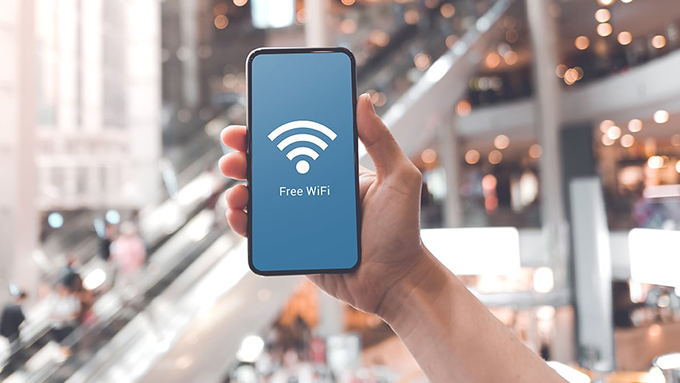
6. Public WiFi
Airports, cafes, hotels: free Wi-Fi. Just accept the terms and conditions, which we rarely read.
The philosopher Michel Foucault showed how modern power operates through seemingly neutral mechanisms that shape behavior. “Free” access is also a mechanism: in exchange, we hand over browsing, location, and behavioral data. The cost lies in this silent surrender.
7. Conversational artificial intelligence
AI platforms allow for all kinds of inquiries: resolving doubts, writing texts, generating ideas. The user feels like they have access to an advanced tool without paying.
The sociologist Antonio Gramsci spoke of hegemony as a form of cultural leadership that becomes normalized. Free AI can be understood in this way: it appears to be a service, but each interaction strengthens corporate infrastructures, business models, and the accumulation of cognitive capital.
The fact that it’s free here is a result of a long-term investment.
8. The most sophisticated gift: the feeling that we owe nothing
Perhaps the most interesting point is that free access not only redistributes costs: it transforms the experience of exchange.
The philosopher Louis Althusser explained that ideology doesn’t operate solely through discourse, but also through everyday practices that structure our perception. When we don’t pay money, we don’t feel loss. When we don’t feel loss, we don’t perceive conflict. When we don’t perceive conflict, the system appears neutral.
Being free doesn’t eliminate exchange, which continues to happen without us being aware of it. And that has profound social consequences.
The paradox of generosity
Digital capitalism doesn’t work by crudely hiding information, but by reshaping perception. If we don’t see the cost, it seems not to exist. If we don’t experience it as a sacrifice, there seems to be no unequal relationship.
None of this implies a conspiracy; it implies a business model. The system doesn’t need us to believe in its goodness; it only needs us to feel comfortable. However, we must keep in mind that there are no miracles in economics. When something seems free, it’s simply because the payment method has shifted.
And what’s truly interesting isn’t that we pay with data, time, or attention, but that, by not paying with money, we stop feeling like we’re paying. Therein lies the most perfect gift of all: the carefully crafted illusion that someone is giving us something without asking for anything in return.
Author Bio: Victor Hugo Perez Gallo is an Assistant lecturer at the University of Zaragoza
